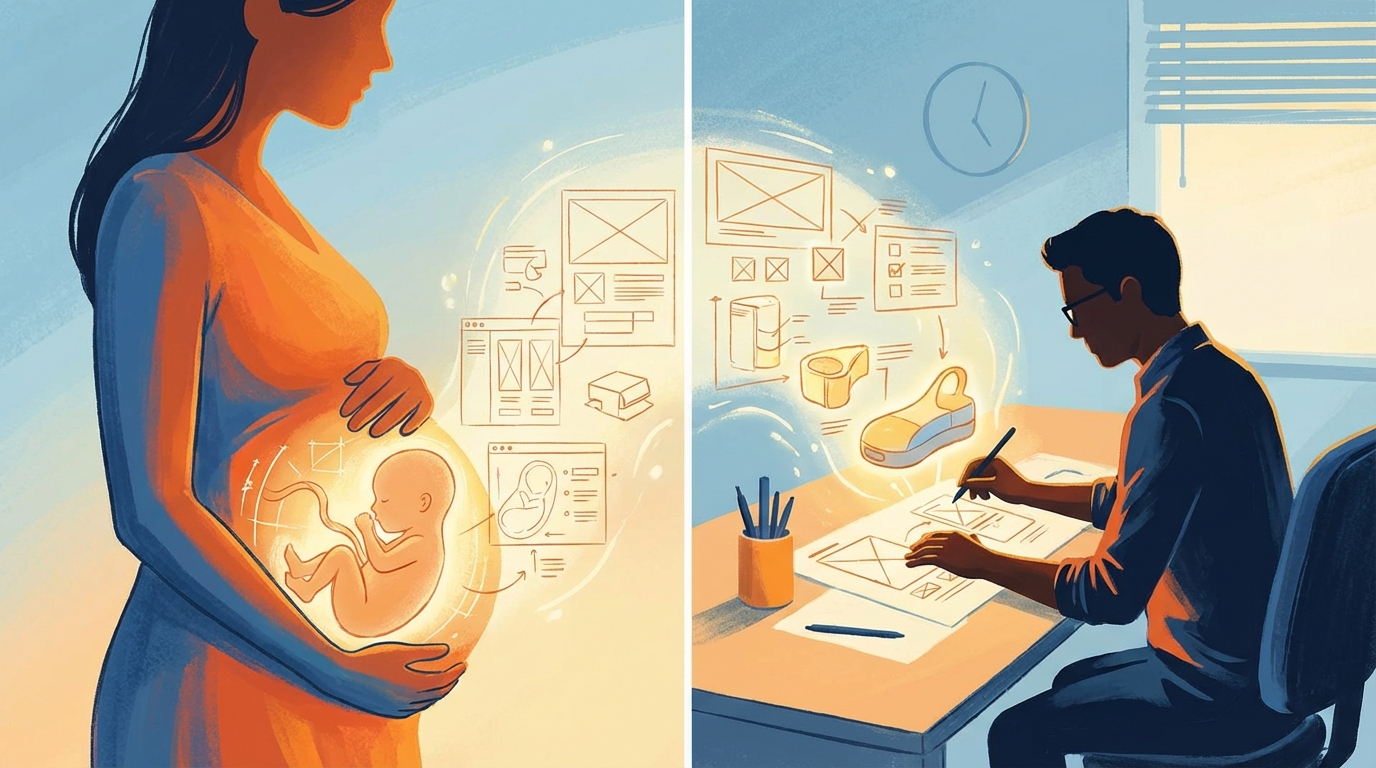
Pregnancy in Product Design: From First Date to Fully-Grown Adult
Pregnancy in Product Design: From First Date to Fully-Grown Adult
A Human Story of How Products Are Born, Raised, and Sent Off Into the World
"Every product you've ever loved was once just a twinkle in a designer's eye — much like you were once just a twinkle in your parents' eyes. The only difference? Products don't keep you up at 3 AM crying. Well, most of the time."
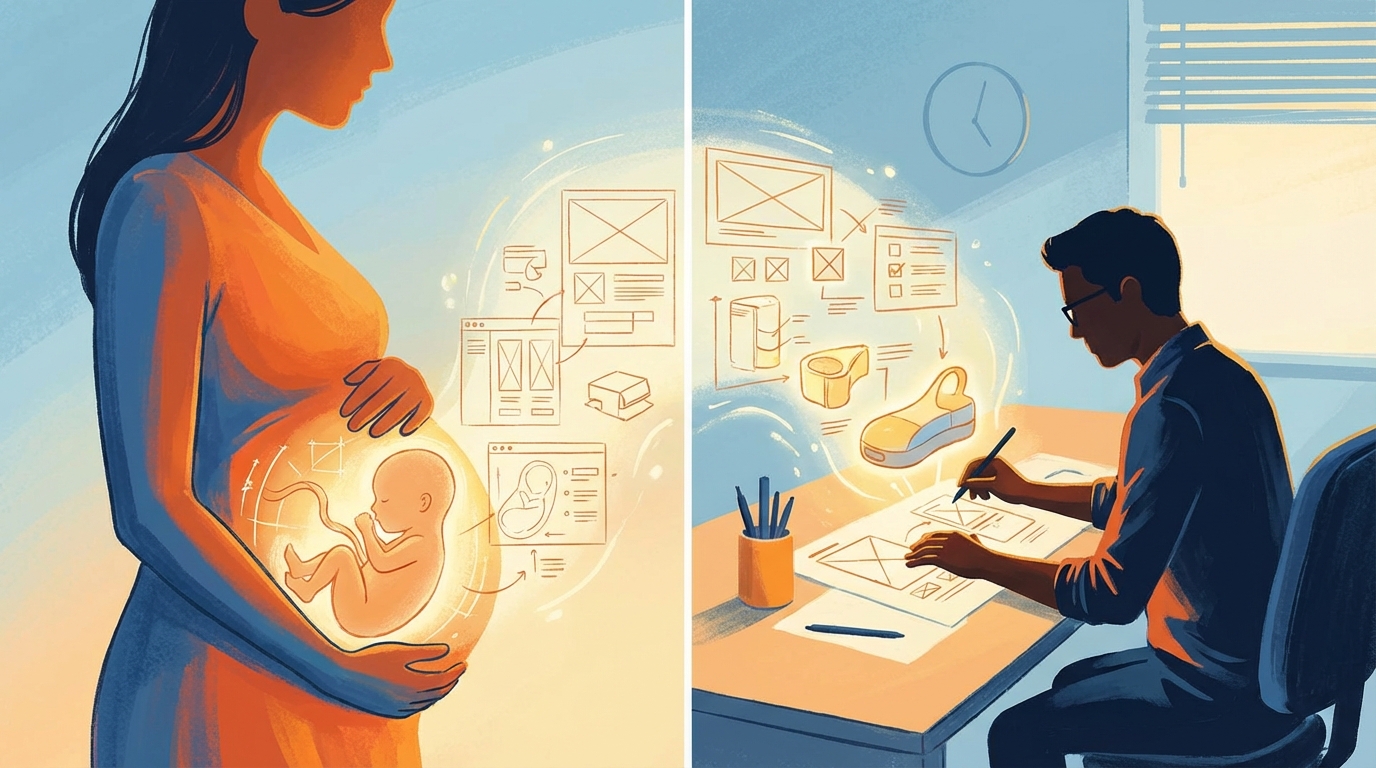
1. Introduction: The Birds, The Bees, and The Design Briefs
Let me tell you a love story.
Not the kind with candlelit dinners and dramatic airport chases (though there will be some drama). This is a story about creation — about how something beautiful comes into existence through passion, struggle, patience, and an unreasonable amount of coffee.
This is the story of how products are born.
You see, the journey of bringing a product to market is remarkably, almost uncomfortably, similar to the journey of bringing a human into the world. From the initial spark of attraction to a problem, through the messy conception of ideas, the long gestation period of development, the painful (but ultimately rewarding) birth of an MVP, and finally, the years of nurturing until your creation can stand on its own two feet in the marketplace.
As someone who has spent years studying human-AI collaboration in design (yes, we'll get to the AI part — think of it as the IVF revolution in product design), I've come to appreciate just how organic the design process truly is. It's not a mechanical assembly line; it's a living, breathing journey of creation.
So grab a cup of tea, get comfortable, and let me take you through the most human way to understand product design — by comparing it to the most human thing we do: create life.
2. Part I: The Pre-Marriage Era — Problem Design
2.1. Chapter 1: Being Single and Self-Aware (Understanding Yourself as a Designer)
Before you can fall in love, you need to know yourself. What are your values? What do you bring to a relationship? What kind of partner are you looking for?
In product design, this is the self-awareness phase — understanding your capabilities, your resources, your company's strategic vision, and what problems you're even equipped to solve.
This maps beautifully to the first diamond in the Double Diamond framework: the Discover phase. You're wide open to possibilities, exploring the landscape of human needs like a hopeful romantic scanning profiles on a dating app.
Key Activities in This Phase:
- Environmental scanning (What's happening in the market?)
- Capability assessment (What can we actually build?)
- Strategic alignment (Does this fit our life goals... er, business goals?)
- Trend analysis (What's hot right now? What's sustainable?)
Design Thinking Parallel: This is pre-Empathize — you're building the foundation of empathy by first understanding your own position in the ecosystem.
Designer's Dating Profile: "Passionate problem-solver seeks meaningful challenges. Enjoys long walks through user research data. Looking for something that could really go somewhere. No time-wasters, please."
2.2. Chapter 2: Playing the Field (Market Research & Opportunity Identification)
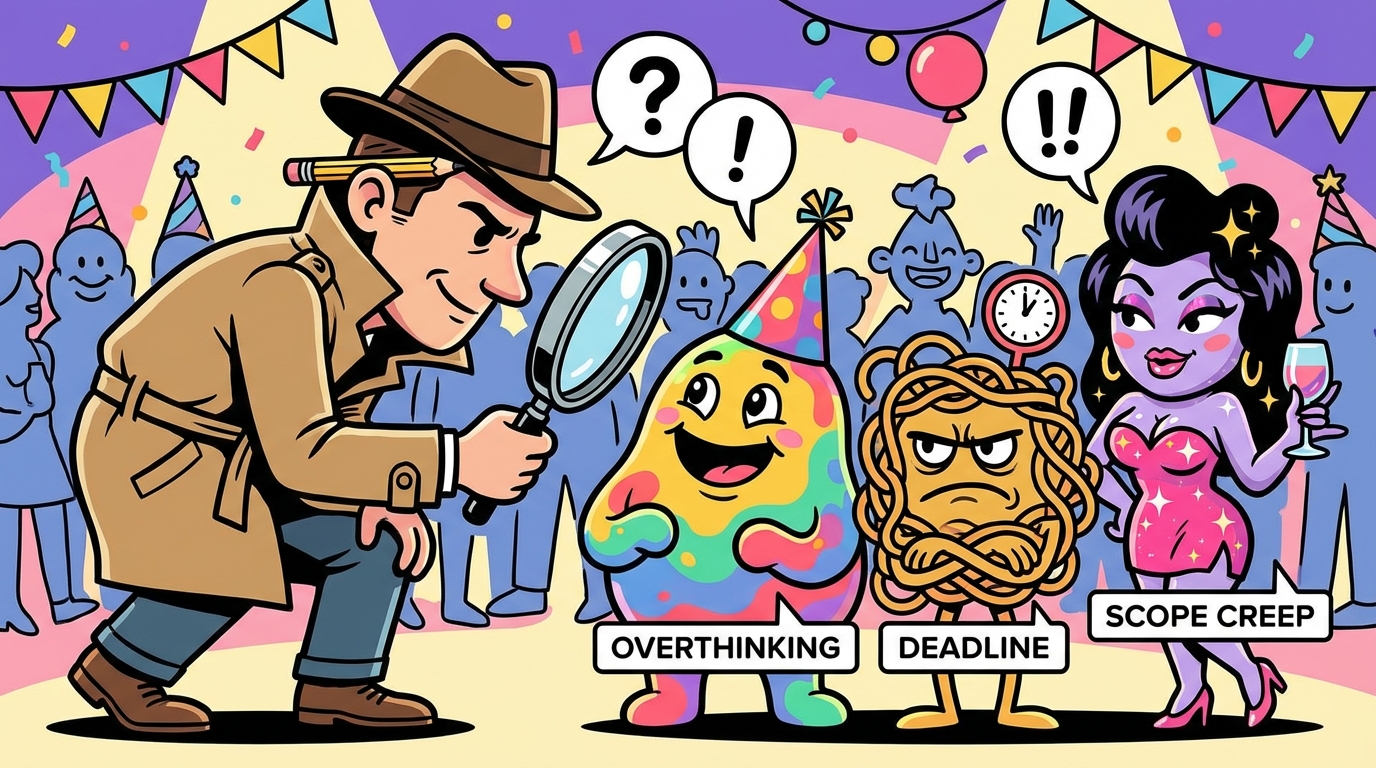
Now you're out there, mingling. You're attending industry events (the nightclubs of the design world), reading research papers (the intellectual equivalent of deep conversations), and observing potential "partners" — problems worth solving.
This is opportunity identification — the phase where you're not committed yet, but you're definitely interested.
In Systems Thinking terms, you're mapping the broader ecosystem. Who are the stakeholders? What are the interconnected problems? Where are the leverage points where a solution could create cascading positive effects?
The Problem Design Questions:
- Is this problem worth solving? (Is this relationship worth pursuing?)
- Who has this problem? (Who am I really connecting with here?)
- How painful is this problem? (Is there genuine chemistry, or just surface attraction?)
- What's the frequency of this problem? (Is this a one-time thing or a lasting connection?)
- Are there existing solutions? (Are they already taken?)
Real-World Example: Airbnb
The founders of Airbnb weren't looking for a problem to solve. They had a problem: they couldn't afford rent. But instead of just solving their own problem, they played the field — they observed that many others faced similar issues (affordable accommodation, authentic travel experiences, earning extra income from spare space). They recognized a systemic opportunity hiding in plain sight.
The market research phase is like speed dating — you're trying to identify chemistry quickly while also being realistic about long-term compatibility. Not every interesting problem is a problem you should marry.
2.3. Chapter 3: The First Date (Initial Problem Exploration)
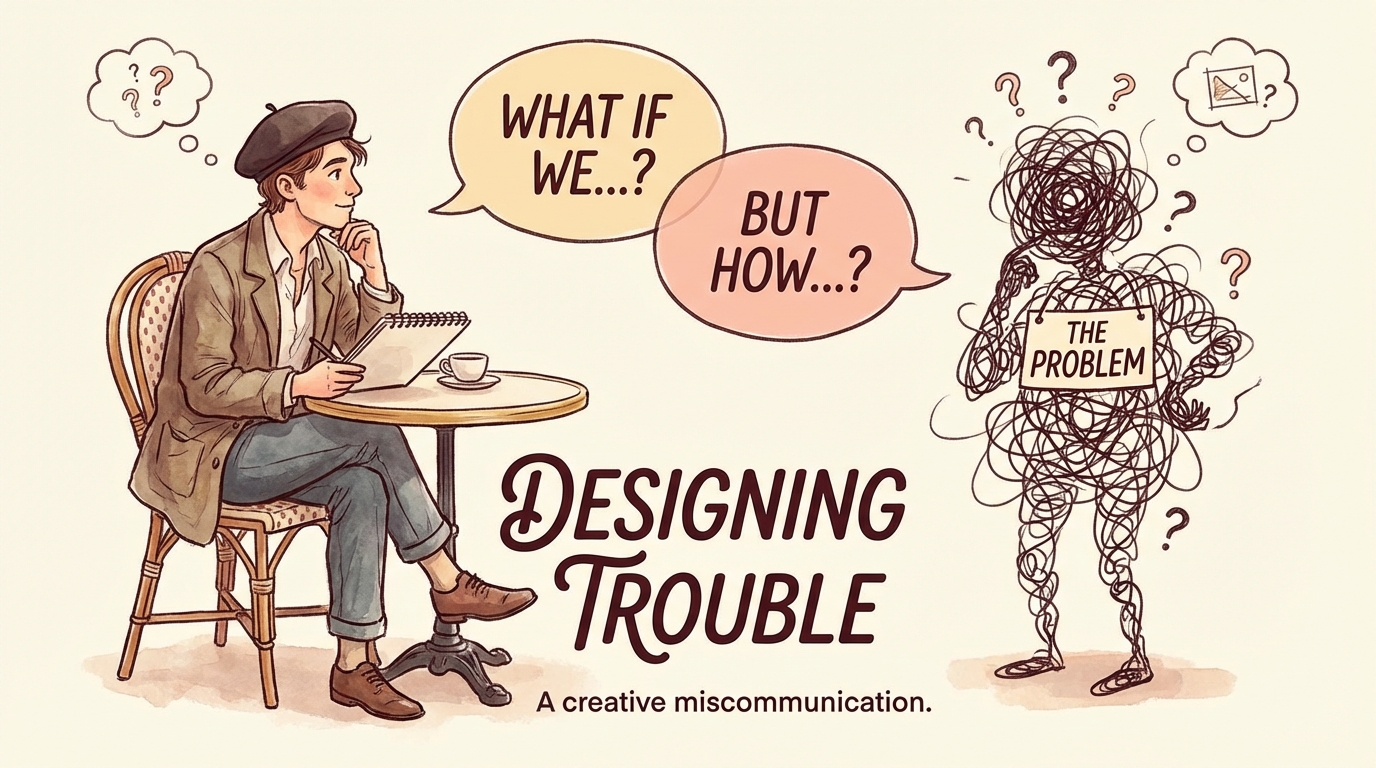
You've identified a problem that intrigues you. Now it's time for the first date — the initial exploration.
This is where you conduct preliminary user research. You're asking questions, listening carefully, trying to understand this problem at a deeper level. What makes it tick? What's its history? What have others tried before?
Design Thinking Stage: Empathize
You're building genuine empathy for the people experiencing this problem. You're conducting:
- User interviews (Getting to know them)
- Contextual inquiry (Seeing them in their natural habitat)
- Diary studies (Understanding their daily life)
- Surveys (The questionnaire phase of dating — "What are your hobbies? Where do you see yourself in five years?")
The Systematic Design Approach:
In Pahl and Beitz's systematic design methodology, this falls under Clarification of the Task — you're gathering all the information needed to understand what you're getting into.
Key Outputs:
- Problem hypothesis
- Initial user personas
- Preliminary journey maps
- A healthy dose of curiosity
First dates in design are nerve-wracking. You're excited about the potential but terrified of discovering a deal-breaker. "Oh, you're actually a hardware problem and I'm a software designer? This is going to be complicated."
2.4. Chapter 4: Going Steady (Problem Definition)
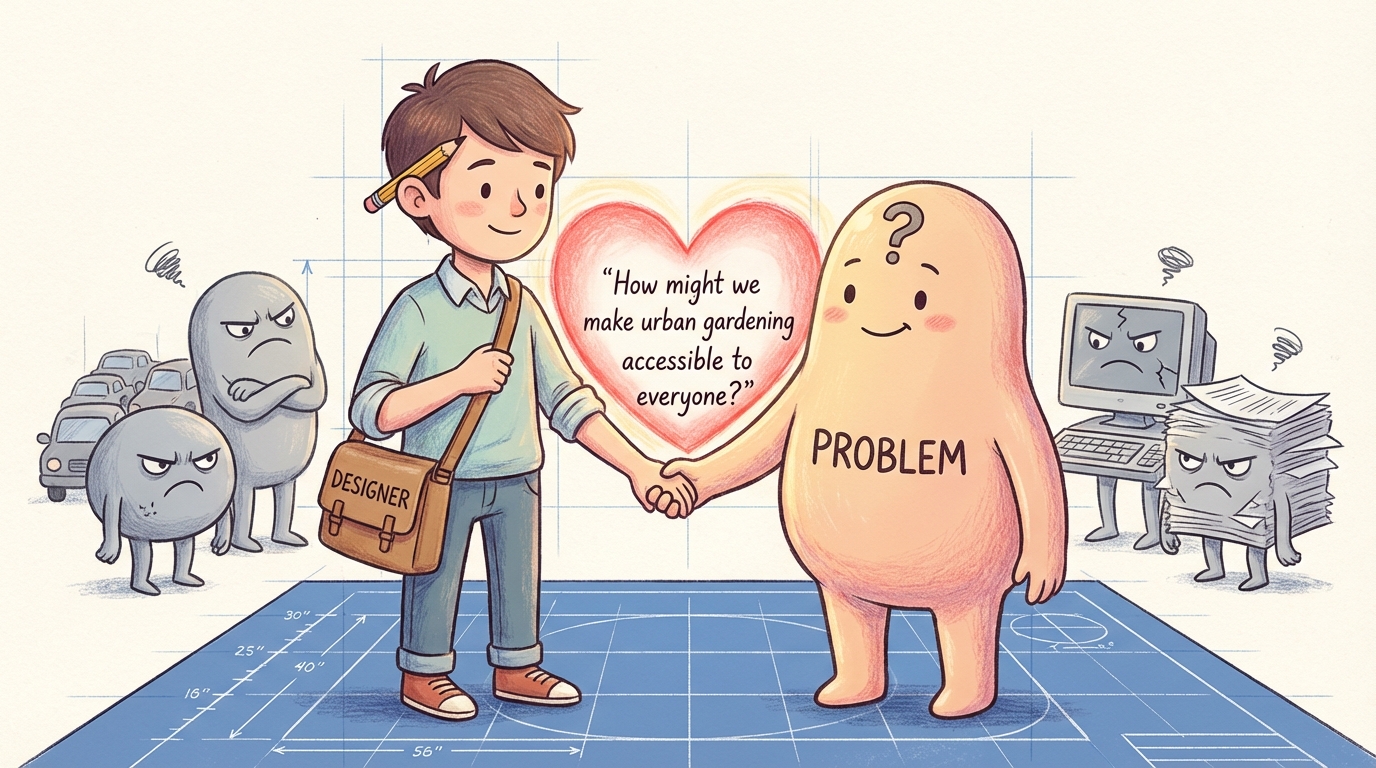
Multiple dates in. Things are getting serious. You've decided: this is the one.
This is the Define phase in Design Thinking — where you synthesize all your research into a clear, focused problem statement. You're going exclusive with this problem.
The Design Brief: Your Relationship Contract
Just as couples might discuss expectations and boundaries, designers create a design brief — a document that crystallizes:
- The core problem to be solved
- Target users and their needs
- Constraints (budget, time, technology)
- Success metrics
- Scope boundaries (what's NOT included)
Double Diamond: The End of the First Diamond
This is the convergent end of the first diamond — you've discovered widely, now you're defining narrowly. You're committing.
The "How Might We" Statement: Your Shared Vision
This is like a couple discussing their future: "How might we create a seamless way for travelers to find authentic, affordable accommodations while helping homeowners earn extra income?"
Real-World Example: Dyson
James Dyson didn't just notice that vacuum cleaners lost suction. He went steady with the problem. He defined it precisely: "How might we maintain consistent, powerful suction throughout the cleaning process?" This tight definition guided 5,127 prototypes (yes, we'll get to that in the pregnancy section — talk about a long gestation).
Going steady means accepting the problem's flaws too. Every problem has baggage — legacy systems, resistant stakeholders, technical constraints. Love it anyway.
2.5. Chapter 5: The Proposal (Design Brief Approval)
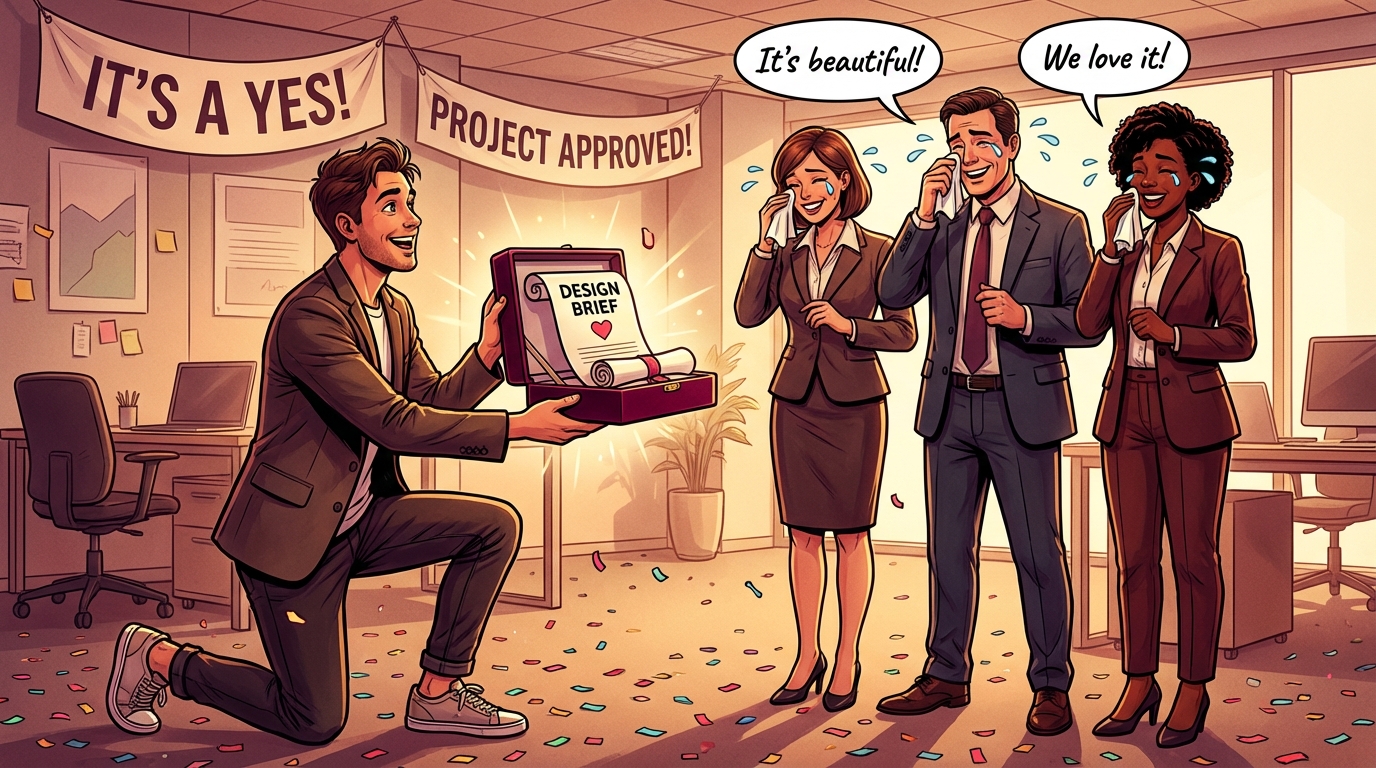
You've done the research. You've dated. You've defined. Now it's time to make it official.
The design brief approval is your proposal — you're asking stakeholders (the parents of the design world) for their blessing to move forward. You're presenting your case: why this problem, why now, why us.
What a Strong Proposal Contains:
- Compelling problem narrative (The love story)
- Evidence from research (Proof of compatibility)
- Strategic alignment (You'll fit in with the family)
- Resource requirements (The dowry... I mean, budget)
- Timeline (When can we expect grandchildren... I mean, products?)
- Risk assessment (Have you thought about what could go wrong?)
The Stakeholder Response:
- "Yes!" — You're engaged! Move to conceptualization.
- "We need to think about it" — More courtship required.
- "It's not you, it's us" — Pivot or kill the project.
- "Have you considered my nephew's startup idea instead?" — Classic stakeholder move.
The proposal phase is when you realize that love isn't just between you and the problem — there's a whole extended family of stakeholders whose opinions suddenly matter very much.
2.6. Chapter 6: The Engagement Period (Design Strategy & Planning)

Congratulations! You're engaged! But marriage isn't tomorrow — there's planning to do.
The engagement period is your design strategy and planning phase. You're:
- Assembling your team (The wedding party)
- Defining methodologies (What traditions will you follow?)
- Setting up tools and processes (Booking the venue, hiring the caterer)
- Creating detailed timelines (Save the dates!)
- Aligning on design principles (Your shared values)
Building the Dream Team:
Just as weddings need different specialists (photographer, florist, DJ), design projects need diverse skills:
- UX Researchers (The listeners)
- UI Designers (The visual storytellers)
- Product Managers (The coordinators)
- Engineers (The builders)
- Data Scientists (The number crunchers)
- Content Strategists (The wordsmiths)
Setting the Design System Foundation:
This is like establishing shared family traditions — design tokens, component libraries, brand guidelines. These ensure everyone speaks the same visual language when the baby arrives.
The engagement phase is exciting but also anxiety-inducing. You've committed, but the real work hasn't started yet. Enjoy this time. Take engagement photos. Update LinkedIn. You've earned it.
3. Part II: Conception — Ideation & Concept Design
3.1. Chapter 7: The Wedding Night (The Ideation Session)
The wedding is done. The planning is over. Now comes the magic.
The ideation session is where conception happens. It's intimate, creative, sometimes awkward, often messy, and absolutely essential.
The Biology of Ideation:
In human reproduction, millions of sperm race toward a single egg. Only one will make it. In design ideation, dozens (sometimes hundreds) of ideas are generated, but only the fittest will survive.
This is divergent thinking at its finest — the second half of the Double Diamond's second diamond. You want QUANTITY. You want VARIETY. You want ideas that make you uncomfortable.
Ideation Techniques (The Positions of Creative Conception):
-
Brainstorming — The classic. Everyone in a room, throwing out ideas. No judgment, just flow.
-
Brainwriting — For introverts. Write ideas silently, pass them around, build on others'.
-
SCAMPER — Substitute, Combine, Adapt, Modify, Put to other uses, Eliminate, Reverse. Systematic creativity.
-
Crazy 8s — Eight ideas in eight minutes. Speed dating for concepts.
-
How Might We + What If — Combine problem framing with possibility thinking.
-
Analogical Thinking — Borrow from other domains. "What would nature do? What would a theme park do? What would a hospital do?"
-
Reverse Brainstorming — "How might we make this problem WORSE?" Then flip it.
The "Multiple Sperm" Reality:
In any good ideation session, you'll have multiple designers contributing. Each brings their own perspective, their own "genetic material":
- The veteran designer contributes experience and pattern recognition
- The junior designer contributes fresh eyes and fewer assumptions
- The engineer contributes feasibility awareness
- The user researcher contributes empathy data
- The business person contributes market awareness
Not all sperm are created equal, and neither are all ideas. Some are fast but shallow. Some are strong but headed in the wrong direction. The magic is in creating an environment where the right combination can emerge.
Real-World Example: Post-it Notes
3M's Post-it Notes were conceived from an ideation session where someone combined two seemingly unrelated things: a "failed" weak adhesive and a need for bookmarks that didn't damage pages. The winning idea wasn't the strongest glue or the best bookmark — it was the unexpected combination.
3.2. Chapter 8: Fertilization — When Sperm Meets Egg (Concept Selection)
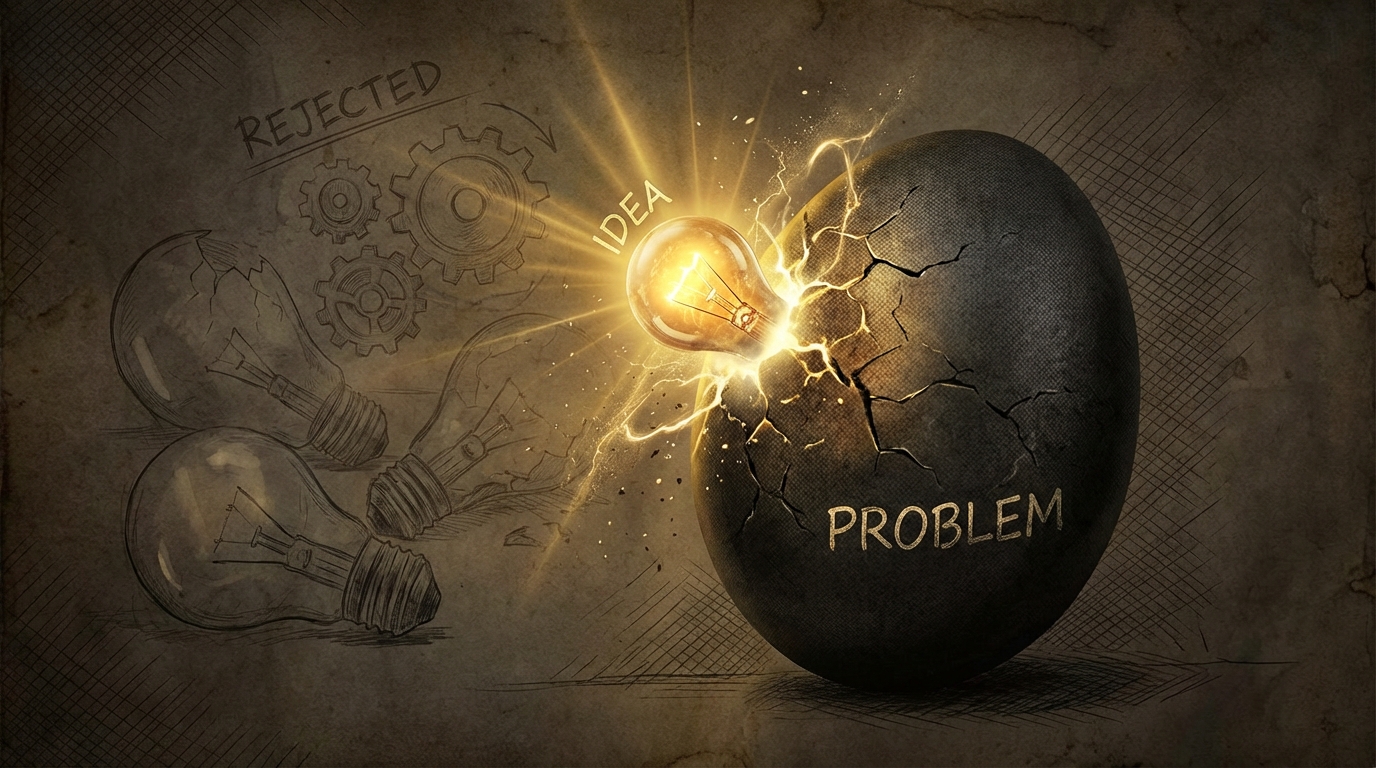
Out of hundreds of ideas, which one will penetrate the egg of opportunity?
This is concept selection — one of the most critical moments in the design process. Get it wrong, and you've just spent nine months gestating the wrong baby.
The Selection Criteria (The Egg's Defense Mechanism):
The problem-egg doesn't let just any idea through. The successful concept must demonstrate:
- Desirability — Do users actually want this? (Sexual selection in evolution)
- Feasibility — Can we actually build this? (Genetic viability)
- Viability — Does this make business sense? (Can it survive in the environment?)
This is IDEO's famous Three Lenses of Innovation.
Selection Methods:
Dot Voting — Democratic but shallow. Good for initial filtering.
Decision Matrix — Weight criteria, score options. Systematic but can feel clinical.
Pugh Matrix — Compare concepts against a baseline. Good for incremental innovation.
Now-How-Wow Matrix — Plot ideas by novelty and feasibility. "Now" = easy and normal. "How" = hard but normal. "Wow" = novel and feasible. You want "Wow."
Concept Testing with Users — Let the target users vote with their reactions.
The Moment of Conception:
When the winning concept is selected, something magical happens. It's no longer "an idea" — it's "THE idea." It has been conceived. It exists as a potential.
In biological terms, we've created a zygote — a single cell containing all the genetic information needed to build a complete human. In design terms, we've created a core concept — a single idea containing all the DNA needed to build a complete product.
The Zygote Contains:
- Core value proposition (The soul)
- Primary user benefit (The heart)
- Key differentiator (The unique genetic code)
- Essential features (The vital organs-to-be)
The moment of conception is both triumphant and terrifying. You've committed your genetic material to this one concept. There's no going back. Well, there is — it's called a pivot — but let's stay positive.
3.3. Chapter 9: The Zygote Stage — Early Concept Development
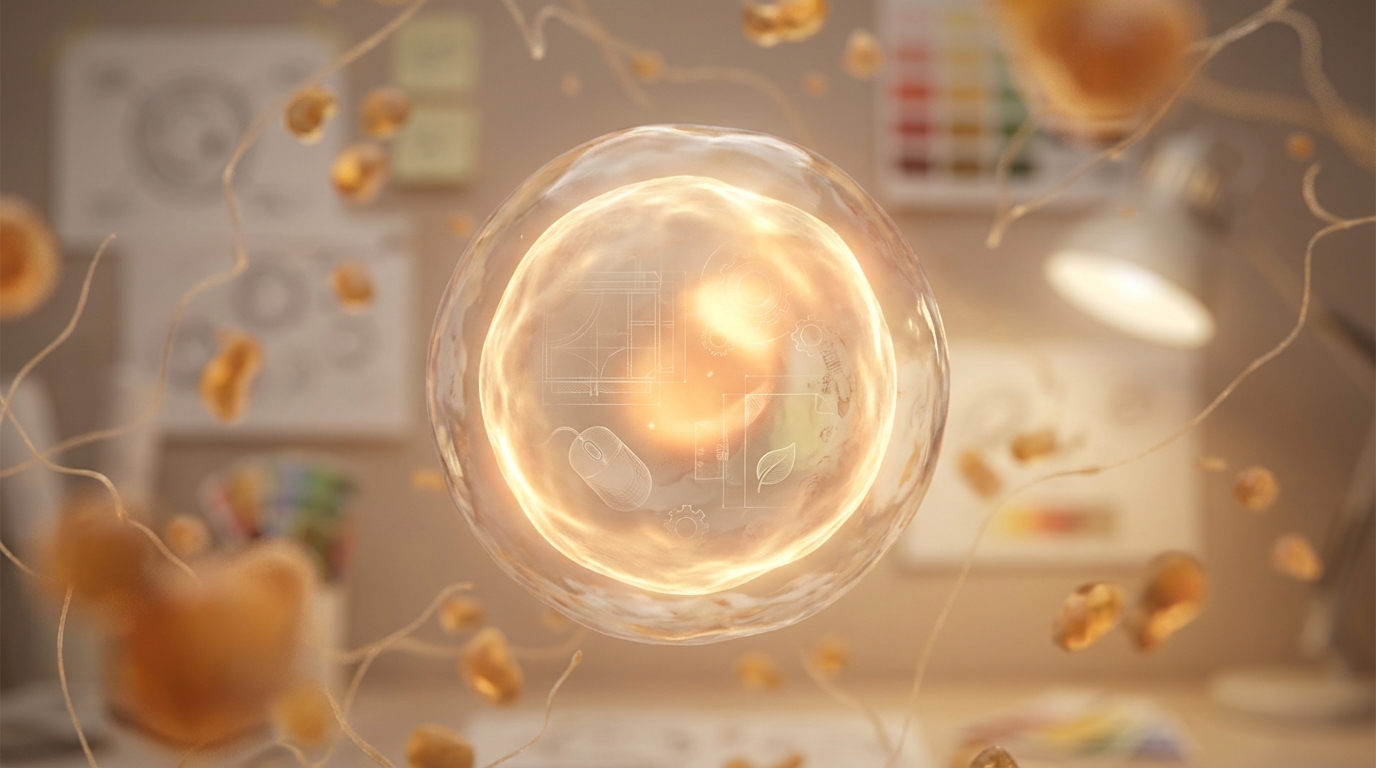
The zygote stage in human development lasts about four days. The single cell divides into two, then four, then eight cells. It's rapidly creating the foundation for everything that follows.
In product design, this is early concept development — the first few days or weeks after concept selection where you're rapidly expanding on the core idea.
What Happens in the Zygote Stage:
-
Concept Elaboration — The single idea divides into multiple aspects. "A marketplace" becomes "a marketplace with these features, this business model, this target segment."
-
Initial Sketching — Fast, rough visualizations. These are the first cell divisions of visual form.
-
Concept Documentation — Writing down what this thing actually IS. The genetic code made explicit.
-
Quick Validation — Sanity checks with users and stakeholders. "Does this embryo look healthy?"
The Critical Question:
During the zygote stage in humans, the cells are "totipotent" — each cell could theoretically become anything. Similarly, during early concept development, the concept is still flexible. This is your last chance for radical changes before the structure starts to form.
The zygote stage feels deceptively calm. "Look, it's just a little concept." But inside, furious activity is happening. Cells are dividing. Decisions are being made. The foundation is being laid.
3.4. Chapter 10: Implantation — Securing Commitment
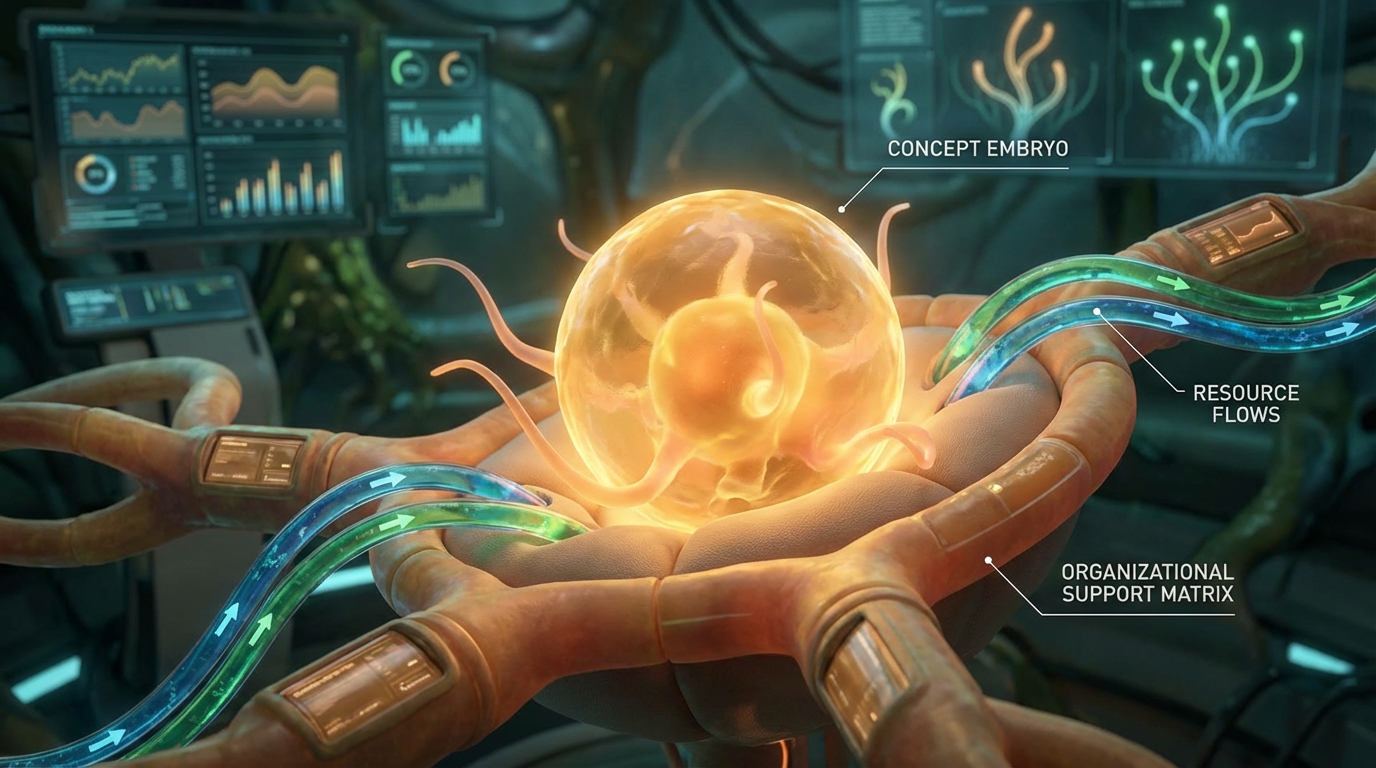
Around day 6-10 in human pregnancy, the blastocyst (slightly more developed zygote) implants in the uterine wall. This is a critical moment — failed implantation means the pregnancy doesn't proceed.
In product design, this is the commitment checkpoint — securing the resources, budget, and organizational support needed to actually develop this concept.
The Implantation Pitch:
You return to stakeholders with:
- Refined concept (no longer just an idea, but a fleshed-out direction)
- Initial validation data (Users responded positively)
- Resource requirements (What we need to gestate this properly)
- Risk assessment (What could cause a miscarriage)
- Timeline to MVP (When will we meet our baby?)
What Can Go Wrong:
- Hostile environment — The organization isn't ready for this concept
- Insufficient resources — Not enough budget/team to nurture development
- Competing concepts — Another project takes priority
- Timing issues — Market conditions changed
Successful Implantation Looks Like:
- Budget approved ✓
- Team allocated ✓
- Executive sponsor committed ✓
- Timeline agreed ✓
- Everyone emotionally invested ✓
Implantation is when it gets real. Before this, the concept could be quietly absorbed and forgotten. After this, there are spreadsheets. There are Jira boards. There are people who've cleared their calendars. The organization is now pregnant.
4. Part III: Pregnancy — Embodiment Design
4.1. Chapter 11: The First Trimester — Foundational Development

The first trimester (weeks 1-12) in human pregnancy is when all major organs begin to form. The heart starts beating. The neural tube develops. It's the most critical period for foundational development.
In product design, the first trimester corresponds to early embodiment design — turning the abstract concept into concrete structure.
What Forms During Design's First Trimester:
The Skeletal System: Information Architecture Just as bones provide structure for the body, information architecture provides structure for the product:
- Content hierarchy
- Navigation structure
- Site/app maps
- Taxonomy and categorization
The Nervous System: User Flows The nervous system carries signals throughout the body. User flows carry users through the product:
- Task flows
- User journeys
- Entry and exit points
- Decision trees
The Circulatory System: Data Architecture Blood flow keeps the body alive. Data flow keeps the product functional:
- Data models
- API structures
- State management
- Integration points
The Heart: Core Functionality The heart starts beating at 6 weeks. Your core functionality should be pumping early:
- Primary feature definition
- Key interactions
- Main value delivery mechanism
First Trimester Deliverables:
- Low-fidelity wireframes
- User flow diagrams
- Information architecture maps
- Technical architecture overview
- Updated requirements documentation
The Morning Sickness of Design:
Just as many pregnant people experience morning sickness in the first trimester, design teams often experience "concept sickness" — moments of doubt, discomfort, and "what have we gotten ourselves into?"
This is normal. The body (and the team) is adjusting to the massive undertaking ahead.
The first trimester is when you're paranoid about everything. "Should we tell people?" "Is it going to stick?" "Is that wireframe supposed to look like that?" Everything feels fragile because everything IS fragile. Treat your concept with care.
4.2. Chapter 12: The Second Trimester — Taking Shape
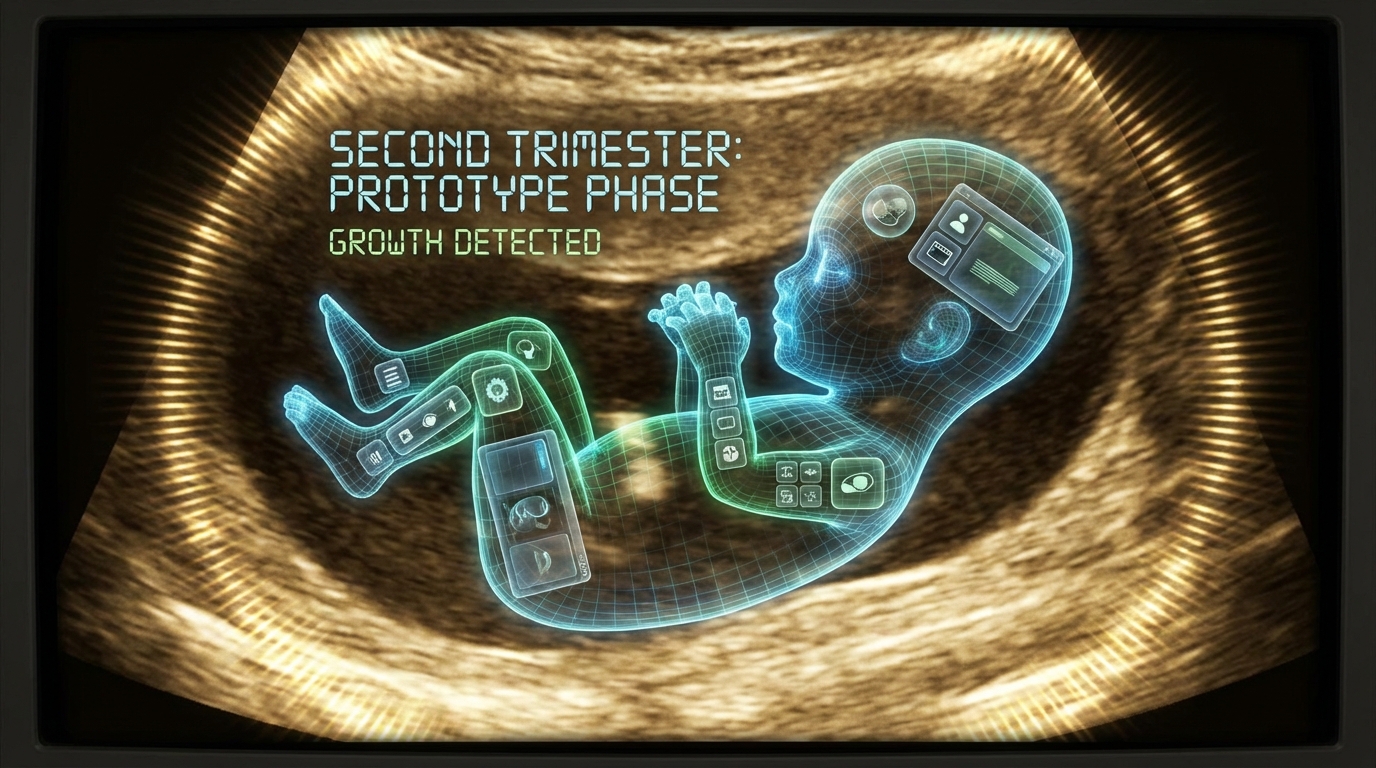
The second trimester (weeks 13-26) is often called the "golden period" of pregnancy. Morning sickness fades, energy returns, and the baby grows rapidly. You can see a recognizable human form.
In product design, this is mid-stage embodiment design — when your abstract concept starts looking like an actual product.
What Develops in Design's Second Trimester:
Facial Features: Visual Design Language You can now see your baby's face. Your product gets its visual identity:
- Color palette
- Typography system
- Iconography
- Spacing and layout grids
- Design tokens
- Brand expression
Arms and Legs: Feature Development The baby can now move. Your product can now DO things:
- Feature specifications
- Interaction design
- Micro-interactions
- Error states and edge cases
- Accessibility considerations
Sex Determination: Platform Decisions Around week 18-20, you can learn the sex. In design, you finalize platform decisions:
- iOS, Android, Web, or all three?
- Desktop, mobile, tablet, responsive?
- Native, hybrid, or web app?
Kicking: Interactive Prototypes The baby kicks! You can feel life. Your stakeholders can interact with prototypes:
- Mid-fidelity clickable prototypes
- User testing sessions
- Stakeholder demos
- "Feel the kick" moments
The Anatomy Scan: Design Review
Around 18-22 weeks, pregnant people have an anatomy scan — a detailed ultrasound checking all systems. In design, this is your major design review:
- Are all user flows complete?
- Is the visual system consistent?
- Do interactions feel right?
- Are we building the right thing?
- Any anomalies to address?
Real-World Example: The iPhone's Second Trimester
During the iPhone's development (2005-2007), the second trimester was when the radical multi-touch interface went from concept to tangible prototype. Engineers could finally FEEL the pinch-to-zoom. Designers could see the actual animations. The abstract became concrete.
The second trimester is when you start showing. Colleagues ask, "How's the project going?" You pull out your prototype like a proud parent-to-be with an ultrasound photo. "Look! It has BUTTONS!"
4.3. Chapter 13: The Third Trimester — Preparing for Birth
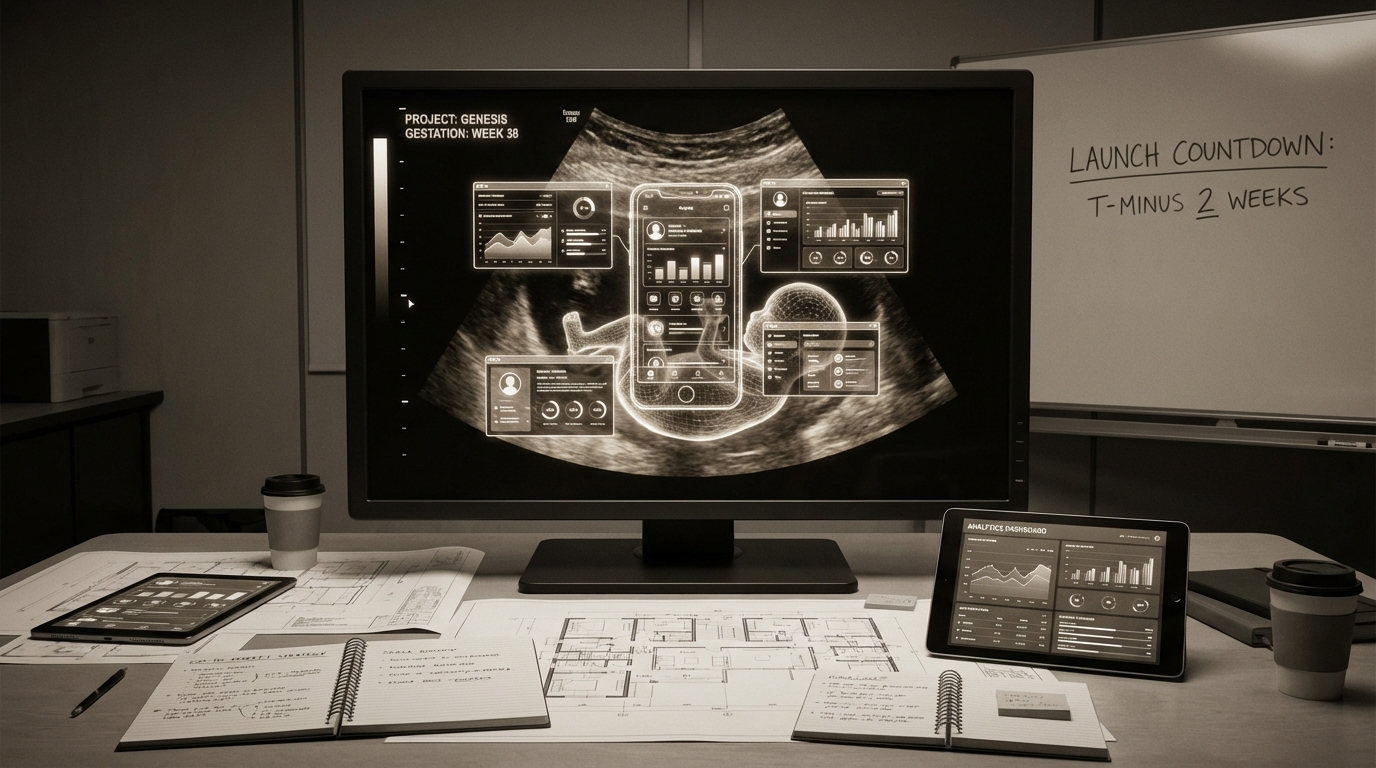
The third trimester (weeks 27-40) is about final preparation. The baby's lungs develop. Fat accumulates. The body prepares for the outside world. Parents prepare the nursery.
In product design, this is late-stage embodiment design — the final preparation before MVP launch.
What Develops in Design's Third Trimester:
Lung Development: Performance Optimization The baby needs to breathe on its own. Your product needs to perform:
- Load time optimization
- Performance testing
- Scalability preparation
- Server infrastructure
Final Weight Gain: Content Completion Real content, real data:
- Copy finalization
- Image assets production
- Content migration
- Data seeding
Positioning for Birth: Pre-launch Preparation The baby gets into position. You prepare for launch:
- Marketing materials
- Press kit
- Support documentation
- Training materials
- Analytics implementation
- Legal compliance (privacy policies, terms of service)
The Baby Shower: Beta Program Friends and family shower you with gifts and support. Beta users shower you with feedback:
- Closed beta program
- Feedback collection systems
- Bug reporting mechanisms
- Early adopter engagement
Nesting Instinct:
In the third trimester, many pregnant people experience a "nesting instinct" — an urge to organize, clean, and prepare the home.
Design teams experience this too:
- Cleaning up design files
- Documenting design decisions
- Creating handoff specifications
- Writing component documentation
- Organizing asset libraries
The Birth Plan:
Just as expectant parents create a birth plan, product teams create a launch plan:
- Launch date and time
- Rollout strategy (big bang vs. phased)
- Monitoring plan
- Rollback procedures
- Communication plan
- Celebration plan (important!)
The third trimester drags. "Is it EVER going to launch?" Every day feels like a week. Everything is ready, but you can't force it. You wait. You nest. You obsessively check the backlog like it's a contraction timer.
5. Part IV: Birth — The MVP
5.1. Chapter 14: Labor — The Final Push

Labor. The hours (sometimes days) of intense work before the baby arrives.
In product design, this is launch week — the final, intense push to get the MVP out the door.
The Stages of Launch Labor:
Early Labor: Final Testing Contractions begin, but you're not rushing to the hospital yet. Final testing happens:
- UAT (User Acceptance Testing)
- Regression testing
- Cross-browser/device testing
- Security audits
- Load testing
Active Labor: Code Freeze and Prep Contractions are regular and strong. Movement is deliberate:
- Code freeze
- Final builds
- Deployment preparations
- Team briefings
- Stakeholder notifications
Transition: The Hardest Part The shortest but most intense phase. This is when you transition from "preparing to launch" to "actually launching":
- Final go/no-go decision
- Last-minute panic fixes (we've all been there)
- Deep breaths
- "Are we really doing this?"
Pushing: Deployment The moment of truth. You push:
- Deploy to production
- DNS propagation
- Feature flags activated
- Monitoring activated
- Someone whispers "it's live"
The Cry: First Users The baby takes its first breath and cries. Your first users load the product and... use it.
- First page views
- First sign-ups
- First transactions
- First feedback (pray for good reviews)
What Can Go Wrong (and How to Handle It):
Emergency C-Section: Hotfix Deployment Sometimes things go wrong. You planned for vaginal delivery, but complications arise. A critical bug in production requires an emergency hotfix. Stay calm, follow the procedure, prioritize the health of the product.
Delayed Birth: Launch Postponement Sometimes the baby isn't ready. If a critical issue is found during final testing, it's better to postpone than to launch something that will harm users (or the business).
The birth of an MVP is one of the most intense experiences in a designer's career. Time dilates. Coffee becomes a food group. Someone is always nervous. But then — it's alive. Your creation exists in the world. Nothing compares to that moment.
5.2. Chapter 15: It's Alive! — Post-Launch Hours

The baby is born. It's breathing. It's crying. It's ALIVE.
The MVP is live. Users are interacting. Metrics are flowing. It's WORKING.
These first hours are magical — and critical.
The First Hour: APGAR for Products
The APGAR score assesses newborn health at 1 and 5 minutes after birth, checking:
- Appearance (color)
- Pulse (heart rate)
- Grimace (reflexes)
- Activity (muscle tone)
- Respiration (breathing)
Your MVP needs its own APGAR check:
- Availability — Is it up? Is it accessible?
- Performance — Is it responsive? Are load times acceptable?
- Errors — Are there critical errors in logs?
- User Flow — Are users completing key journeys?
- Feedback — What's the immediate sentiment?
The First Day: Bonding and Monitoring
Just as new parents bond with their baby while also anxiously monitoring every breath, launch teams bond with their product while anxiously monitoring every metric:
- Real-time analytics dashboards
- Error monitoring (Sentry, DataDog)
- User session recordings (Hotjar, FullStory)
- Social media mentions
- Support tickets
The Birth Announcement:
- Press release goes live
- Social media celebration
- Internal announcement
- Champagne (or equivalent celebration)
- Team photo with the product
Real-World Example: Twitter's Birth
When Twitter launched at SXSW 2007, the team was physically present, watching people use it in real-time. They saw the immediate feedback, the confusion, the delight. They iterated on the spot. That "first contact" with real users in the wild shaped the product's early evolution.
The first hours after launch are surreal. You refresh the dashboard compulsively. Every notification makes your heart rate spike. Is that a good review? Is that a bug report? Is that user number 100? Sleep is for people who haven't just launched.
6. Part V: Infancy — Early Growth and Iteration
6.1. Chapter 16: The Newborn Phase (0-3 Months Post-Launch)
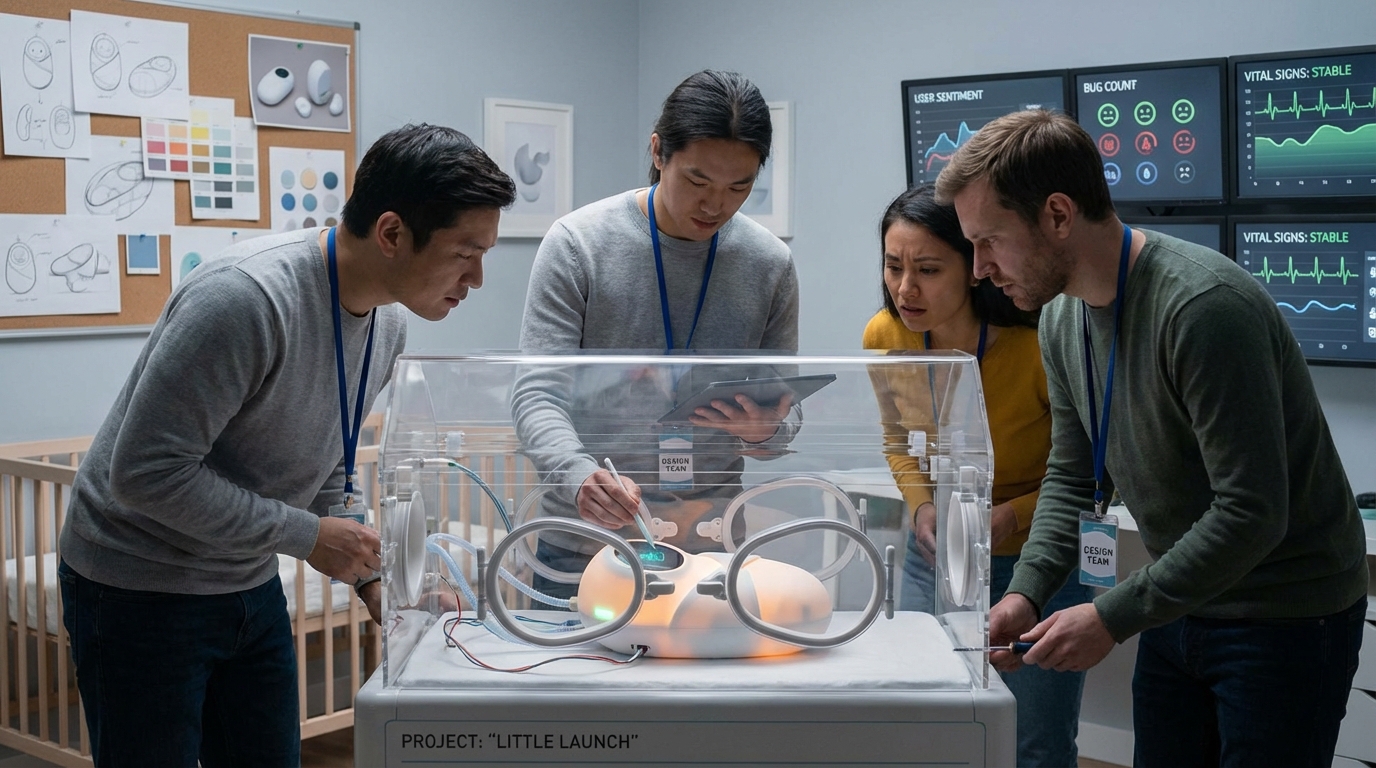
Welcome to the newborn phase. Your MVP is alive, but it is FRAGILE.
Newborn humans are entirely dependent on caregivers. They eat, sleep, and poop. That's it. Newborn products are similarly dependent on the team, and similarly limited in capability.
Characteristics of the Newborn Product:
- Frequent feeding (iteration) — Rapid updates based on immediate feedback
- Sleep deprivation (on-call rotation) — Someone is always monitoring
- Crying (bugs and complaints) — Users will find problems. They will be vocal.
- Milestones (small wins) — First 1,000 users! First positive review! First organic share!
The Feeding Schedule: Iteration Cadence
Newborns eat every 2-3 hours. Your product needs regular feeding too:
- Daily standups
- Weekly sprint cycles
- Rapid hotfixes
- Bi-weekly releases
- Continuous feedback integration
Common Newborn Issues:
Colic (Persistent User Complaints) Some users will complain loudly and persistently about something that seems minor. Like colic, this is exhausting and sometimes you just have to wait it out while making gentle improvements.
Jaundice (Yellow Flags) Minor issues that need monitoring but aren't emergencies. A feature isn't performing as expected. A metric is slightly off. Keep an eye on it.
Failure to Thrive The scariest scenario: users aren't engaging. Growth is flat. The product isn't catching on. This requires immediate investigation and intervention.
The Pivot Conversation:
Sometimes, despite your best efforts, the newborn isn't thriving. The hard conversation: do we adjust the approach, or is there something fundamentally wrong with the product-market fit?
The newborn phase is exhausting. Everyone is sleep-deprived. Every small victory feels huge. Every setback feels catastrophic. You develop an irrational attachment to metrics. "The DAU increased by 3%! MY BABY IS THRIVING!"
6.2. Chapter 17: The Infant Phase (3-12 Months Post-Launch)
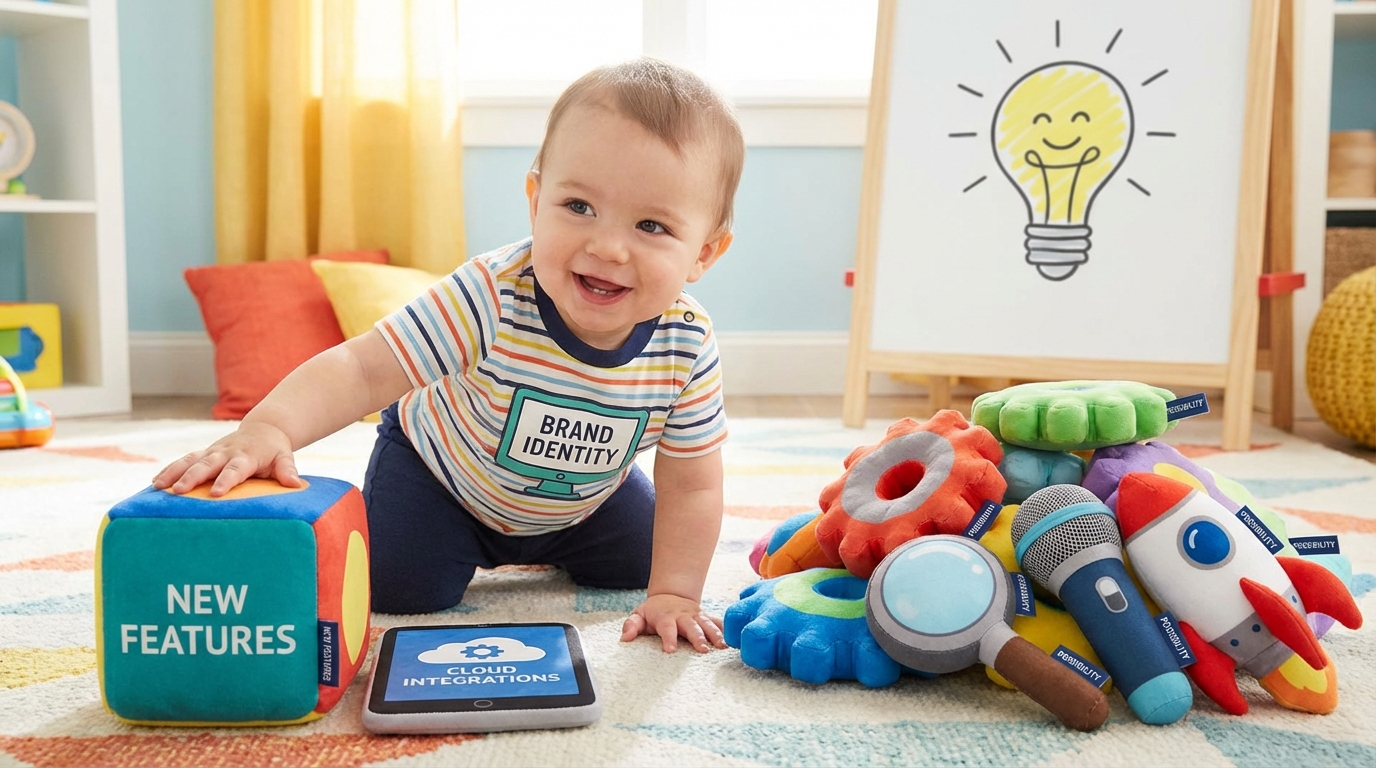
Your product has survived the newborn phase. It's still small, but it's growing. It's starting to develop a personality. It's reaching milestones.
Infant Product Milestones:
Smiling (Positive User Sentiment) Around 2 months, babies smile socially. Your product starts getting genuine love:
- Positive reviews
- Unsolicited testimonials
- Social media love
- "I showed this to my friend" moments
Grasping (Feature Retention) Babies learn to grasp objects. Your product learns what features users grasp onto:
- Feature usage analytics
- "Sticky" feature identification
- Abandonment point analysis
Sitting Up (Stability) Around 4-7 months, babies sit independently. Your product becomes stable:
- Reduced bug frequency
- Predictable performance
- Established operational rhythm
Crawling (Expansion) Around 6-10 months, babies crawl. Your product starts moving into new territory:
- New feature development
- Market expansion
- Platform expansion
- Integration development
First Words (Brand Voice) Around 9-12 months, babies say first words. Your product develops its voice:
- Refined copywriting
- Consistent tone
- Recognizable personality
- "That's so [Product Name]" moments
The Parenting Style Debate:
Just as parents debate parenting approaches, product teams debate development philosophy:
Helicopter Parenting — Over-monitoring, over-controlling every detail. Results in dependent, fragile products.
Free-Range Parenting — Letting users figure it out, minimal guidance. Works for some products, disastrous for others.
Authoritative Parenting — Clear guidance with room for exploration. The "responsive with boundaries" approach. Generally recommended.
The infant phase is when you stop holding your breath. The product is going to survive. Now the question is: what will it become? The personality is forming. The trajectory is emerging. Enjoy this time — they grow up so fast.
7. Part VI: Childhood — Product Growth
7.1. Chapter 18: The Toddler Years (Year 1-2)
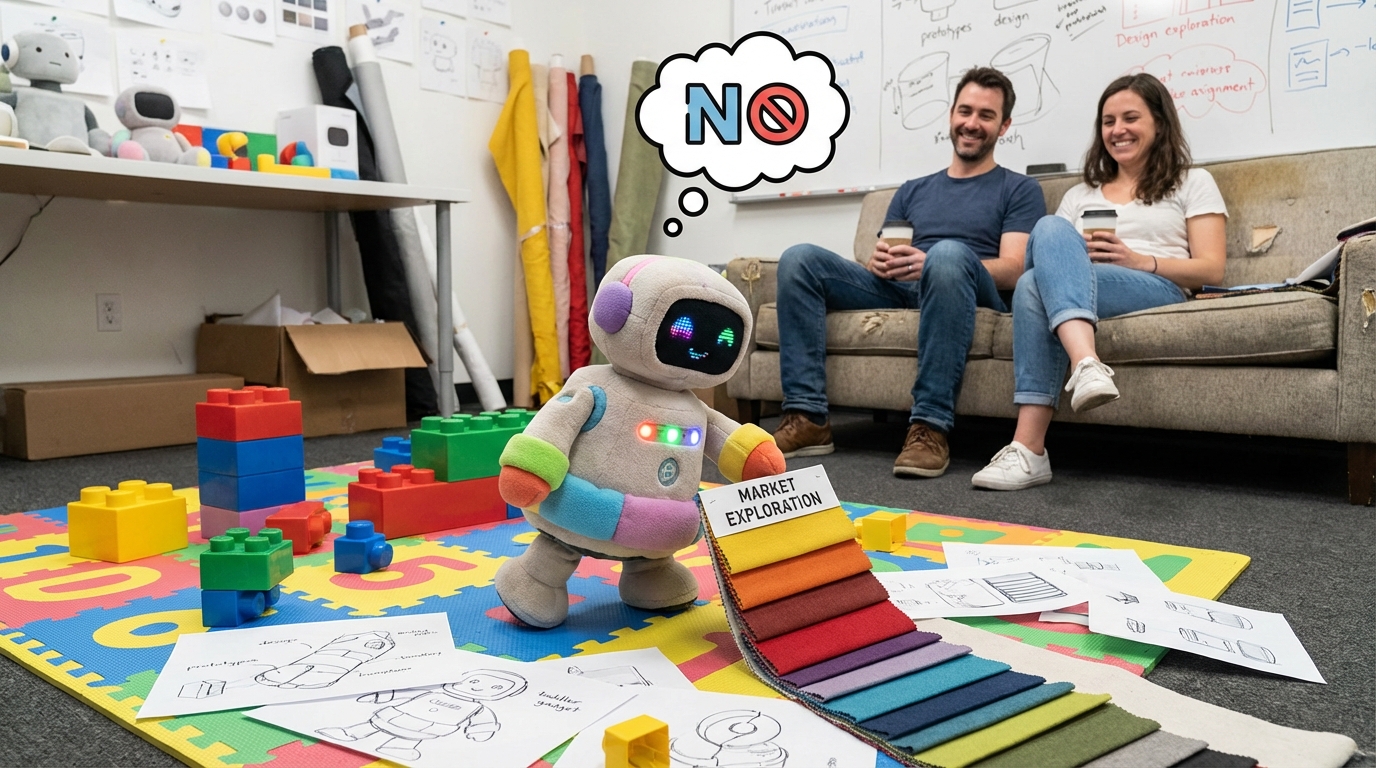
Toddlerhood is characterized by rapid development, growing independence, and the word "no."
Your product is now a toddler. It's walking (sort of). It's talking (sort of). It's testing boundaries constantly.
Toddler Product Characteristics:
Walking (First Real Scalability) Toddlers are mobile for the first time. Your product handles real scale:
- 10x user growth
- Performance under load
- Infrastructure scaling
- Team scaling
Talking (Communication Features) Toddlers learn to communicate. Your product develops communication:
- In-app messaging
- Email integration
- Notification systems
- Social sharing
The "No" Phase (Defining What You Won't Do) Toddlers discover "no." Your product defines boundaries:
- Feature requests you won't build
- Markets you won't enter
- Compromises you won't make
- User types you won't serve
Tantrums (Growing Pains) Toddlers have meltdowns. Products have growing pain incidents:
- Outage during traffic spike
- Data migration issues
- Integration failures
- Team conflict as culture scales
Parallel Play (Competitive Awareness) Toddlers engage in parallel play — playing alongside other children. Your product exists alongside competitors:
- Competitive analysis
- Feature parity considerations
- Differentiation reinforcement
- Market positioning
The Terrible Twos:
Product teams experience this too — the phase where nothing is quite right:
- The early architecture is limiting growth
- The original team dynamics are shifting
- Technical debt is accumulating
- The vision is getting muddled by feature requests
This is when you need to make hard decisions about what the product will become.
The toddler phase is chaos with moments of pure joy. Your product learned to do something new! Now it's broken three things while doing it. It's curious about everything, which is great until it gets curious about a bad idea. Constant vigilance.
7.2. Chapter 19: Childhood (Years 3-12)

Childhood is the long period of learning, socializing, and developing competence before adolescence.
Your product is now established. It's not a startup anymore. It's a real product with a real user base and real responsibilities.
Childhood Product Phases:
Preschool (Years 3-5): Socialization
- Industry recognition and awards
- Partnership development
- Community building
- Ecosystem participation
- "Playing well with others"
Elementary School (Years 5-8): Skill Building
- Major feature expansions
- Platform maturation
- Operational excellence
- Process optimization
- Building core competencies
Middle School (Years 8-12): Pre-Adolescent Change
- Identity questions (What are we really about?)
- Peer pressure (What are competitors doing?)
- Growing pains (Architecture doesn't fit anymore)
- Preparation for the next phase
Homework: Technical Debt Paydown
Children do homework. Products pay down technical debt:
- Refactoring
- Documentation
- Test coverage improvement
- Infrastructure modernization
- "Cleaning your room" initiatives
Extracurriculars: Adjacent Features
Children explore activities. Products explore adjacent opportunities:
- Experimental features
- A/B tests
- Innovation sprints
- Hack weeks
Report Cards: Metrics Reviews
Children get report cards. Products get quarterly reviews:
- KPI analysis
- OKR assessment
- Strategic alignment checks
- Stakeholder presentations
Real-World Example: Slack's Childhood
Slack (launched 2013) went through a clear childhood phase:
- Preschool: Building initial enterprise customer base
- Elementary: Developing channels, integrations, threads
- Middle School: Enterprise features, competing with Microsoft, defining what it meant to be more than "IRC for companies"
Childhood is when you realize your product has a life of its own. Users have ideas about what it should be. The market has expectations. You're no longer fully in control — you're a steward. Your job is to guide, not dictate.
7.3. Chapter 20: The Teenage Years — The Pilot Product

Ah, the teenage years. A time of drama, identity crises, hormonal surges, and the intense desire to be taken seriously.
In product terms, this is the pilot product phase — when your MVP has grown into something serious enough for major deployments, but isn't quite the mature, stable adult product yet.
Teenage Product Characteristics:
Identity Crisis "Who AM I?" becomes a product strategy question:
- Are we a B2B or B2C product?
- Are we a platform or a tool?
- Are we premium or mass-market?
- What do we want to be when we grow up?
Growth Spurts Teenagers grow rapidly and unevenly. Products experience similar asymmetric growth:
- One feature becomes unexpectedly popular
- One market segment adopts faster than expected
- One use case dominates unexpectedly
- The roadmap needs constant adjustment
Rebellion (The Redesign) Teenagers rebel against their parents. Products rebel against their original design:
- Major redesigns
- "Version 2.0" launches
- "We've completely rethought X"
- Breaking changes that upset loyal users
Peer Pressure Teenagers are influenced by peers. Products face market pressure:
- Feature parity demands
- Competitive response
- Industry trends
- "Everyone else has AI features, why don't we?"
First Serious Relationships (Enterprise Pilots) Teenagers start dating seriously. Products get serious customers:
- Enterprise pilots
- Long-term contracts
- Deep customization requests
- Account management relationships
Acne (Technical Debt Eruptions) Teenagers get acne from rapid growth. Products have technical debt surface:
- Performance issues that were hidden at smaller scale
- Security vulnerabilities discovered
- Architectural limitations exposed
- "We should have built it differently" realizations
The Pilot Product Balancing Act:
This phase requires balancing:
- Innovation vs. Stability
- Growth vs. Quality
- New customers vs. Existing customers
- Vision vs. Market demand
- Cool new features vs. Fixing what's broken
The teenage years are when you realize parenting is hard. Your product has opinions. Users have demands. The market has expectations. Everyone is yelling at you for different things. And just like real teenagers, sometimes your product makes choices you wouldn't have made. Let go. Guide gently. Trust the process.
8. Part VII: Adulthood — The Full Product
8.1. Chapter 21: Young Adulthood (The Full Product Launch)

The teenage years are over. Your product is now an adult.
Young Adulthood = General Availability (GA)
This is the moment when your product leaves beta, pilot, early access — whatever you called it — and enters the "real world" as a fully supported, generally available product.
Characteristics of Product Adulthood:
Financial Independence The product sustains itself (or at least contributes significantly):
- Revenue generation
- Cost efficiency
- Unit economics that work
- Investment in continued development justified by returns
Professional Identity The product has a clear position in the market:
- Established market category
- Clear competitive positioning
- Recognized brand
- Defined value proposition
Stable Relationships Long-term customer relationships:
- Enterprise contracts
- Retention metrics that work
- Customer success programs
- Partnership agreements
Responsibilities Adult products have obligations:
- SLAs to meet
- Compliance requirements
- Customer support standards
- Backward compatibility commitments
The Full Product vs. The MVP:
| Aspect | MVP | Full Product |
|---|---|---|
| Feature scope | Minimal | Comprehensive |
| Quality bar | Good enough | Excellent |
| Scale | Small | Large |
| Support | Best effort | Committed |
| Pricing | Experimental | Established |
| Documentation | Basic | Extensive |
| Legal | Minimal | Complete |
Real-World Example: Google's Product Lifecycle
Google famously kept products in "beta" for years (Gmail was in beta for 5 years!). This wasn't because Gmail wasn't mature — it was a cultural quirk. When Gmail finally left beta in 2009, it was a fully mature adult product that had been doing adult things for years.
Young adulthood is when you realize your job as a parent is mostly done. You've shaped this thing for years. Now it has to succeed or fail largely on its own merits. You're still there for support, but the product is making its own way in the world.
8.2. Chapter 22: Career Building (Market Expansion)

Adults build careers. Products build market presence.
Career Development for Products:
Climbing the Ladder (Market Penetration) Deeper penetration in existing markets:
- Enterprise tier
- SMB tier
- Consumer tier
- Government/regulated sectors
New Job Opportunities (Market Expansion) Entering new markets:
- Geographic expansion
- New industry verticals
- New use cases
- New customer segments
Skills Development (Product Extension) Adding new capabilities:
- Feature expansions
- Platform additions
- Service additions
- Acquisition integrations
Networking (Ecosystem Building) Building relationships:
- API ecosystem
- Partner integrations
- Marketplace
- Developer community
The Career Pivot:
Sometimes careers need pivots. Products too:
- Slack pivoted from gaming to business communication
- Instagram pivoted from location check-ins to photos
- YouTube pivoted from dating videos to general video hosting
Career building is about making smart choices about where to invest energy. Not every market is worth entering. Not every feature is worth building. Like a career-minded adult, the product must be strategic.
8.3. Chapter 23: Mature Adulthood — The Established Product

Welcome to mature adulthood. The product has arrived.
Characteristics of Product Maturity:
Stable Income Predictable revenue streams:
- Subscription renewals
- Enterprise contracts
- Established pricing power
- Healthy margins
Life-Work Balance Sustainable operations:
- Optimized team structure
- Efficient processes
- Manageable technical debt
- Healthy release cadence
Wisdom Deep market understanding:
- Knows what works and what doesn't
- Understands customer needs deeply
- Has learned from failures
- Makes informed decisions
Legacy Impact and influence:
- Industry influence
- Trained many users
- Spawned competitors
- Defined patterns others follow
The Midlife Crisis:
Yes, products have midlife crises too:
- "Is this all there is?"
- "Should we completely reinvent ourselves?"
- "Young startups are doing cool things we can't do"
- "We've lost our edge"
This is when companies make dramatic moves — acquisitions, complete redesigns, new business models.
Real-World Example: Microsoft Office
Microsoft Office is the quintessential mature adult product:
- Decades of stable revenue
- Clear market position
- Evolved steadily (on-premise → cloud → AI features)
- Had its midlife crisis and emerged stronger (Office 365 transformation)
- Now experiencing a second youth with Copilot AI integration
Mature adulthood is a good place to be, but it's not the end of the story. Mature products must stay relevant, keep learning, and avoid the trap of complacency. Even adults need to keep growing.
9. Part VIII: The AI Revolution — Test Tube Babies and Beyond
9.1. Chapter 24: AI as IVF — Accelerated Conception
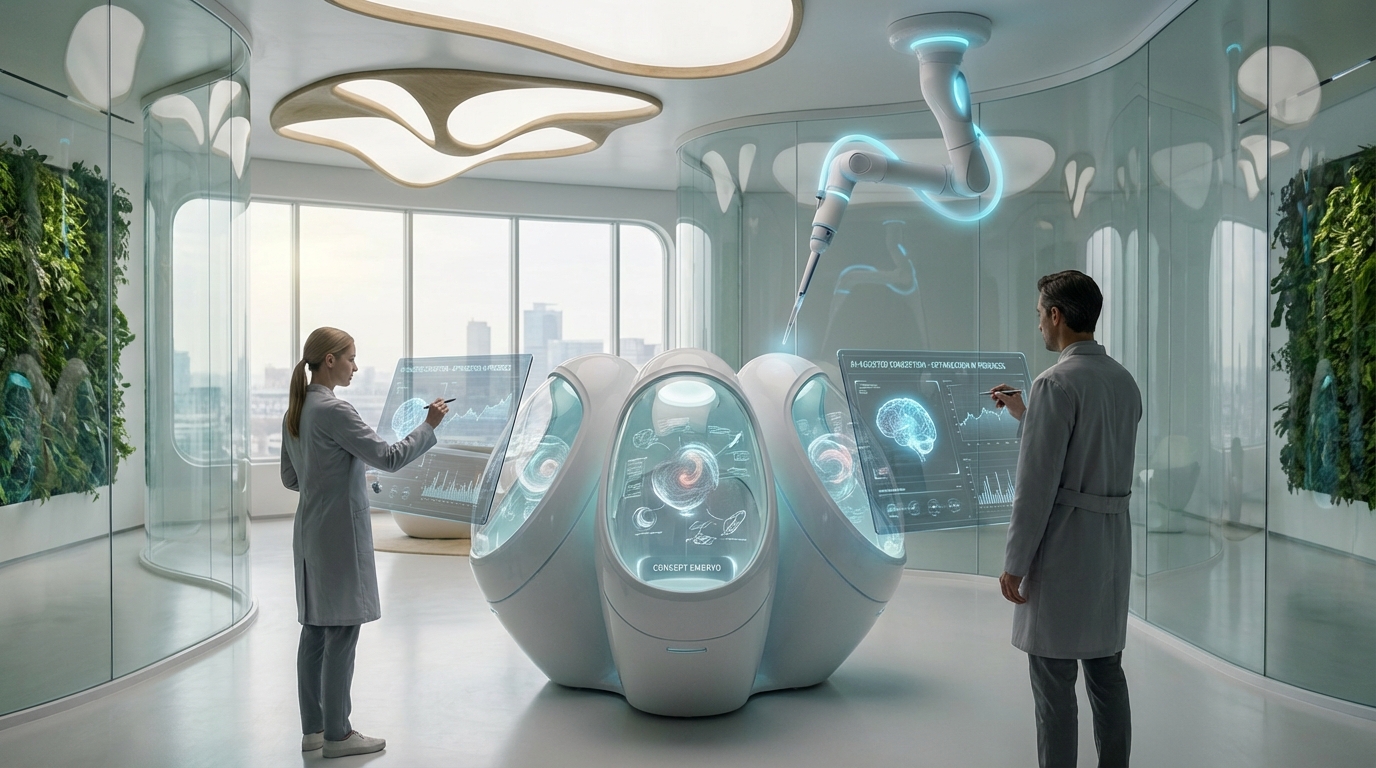
Let's talk about the elephant in the room: Artificial Intelligence.
AI is to product design what IVF (In Vitro Fertilization) is to human reproduction — it dramatically accelerates the process, enables previously impossible scenarios, and raises profound questions about the nature of creation.
The Traditional Conception:
- Two or more designers
- Long brainstorming sessions
- Manual ideation
- Limited variations explored
- Time-intensive
The AI-Assisted Conception:
- Human designers provide the "genetic material" (goals, constraints, inspiration)
- AI generates hundreds of variations rapidly
- Multiple "embryos" can be created simultaneously
- Exploration is broader and faster
- Human selection and refinement remains critical
How AI Accelerates Each Phase:
Problem Design (Pre-Marriage):
- AI-powered market research analysis
- Automated trend detection
- Sentiment analysis at scale
- Pattern recognition across vast datasets
Concept Design (Conception):
- Generative AI for ideation
- Rapid variation generation
- Style exploration
- Competitive analysis automation
Embodiment Design (Pregnancy):
- AI-generated UI variations
- Automated design systems
- Code generation from designs
- Testing automation
Detailed Design (Birth Preparation):
- AI-powered QA
- Automated accessibility checking
- Performance optimization suggestions
- Documentation generation
The Test Tube Baby Analogy:
In IVF:
- Eggs and sperm still come from humans (or donors)
- Fertilization happens in a lab
- Multiple embryos can be created
- Selection happens before implantation
- The pregnancy and birth proceed naturally
In AI-assisted design:
- Goals and constraints still come from humans
- Ideation can happen with AI assistance
- Multiple concepts can be generated rapidly
- Human selection determines what to pursue
- Development and launch proceed with human guidance
The Critical Point: Just as IVF babies are still fully human (they just got a different start), AI-assisted products are still fully products. The human elements — understanding needs, making value judgments, caring about users — remain irreplaceable.
AI is like having a really, really fast brainstorming partner who never gets tired and can draw a thousand variations before lunch. But that partner doesn't actually CARE about users. You do. That's why you're still essential.
9.2. Chapter 25: GEMINI and Synergistic Human-AI Collaboration

The future isn't humans OR AI — it's humans WITH AI.
This is the insight behind frameworks like GEMINI (an active ideation framework for synergistic human-AI collaboration developed in cutting-edge design research). The idea is that humans and AI have complementary strengths:
What Humans Bring:
- Empathy and understanding
- Value judgments
- Contextual awareness
- Creative leaps
- Ethical considerations
- Meaning-making
- Domain expertise
- Emotional intelligence
What AI Brings:
- Speed and scale
- Pattern recognition
- Variation generation
- Data processing
- Consistency
- 24/7 availability
- Cross-domain knowledge
- Tireless iteration
The Synergy in Action:
Ideation: Human provides the "what" and "why," AI rapidly explores the "how"
Analysis: Human asks the right questions, AI processes vast amounts of data
Synthesis: Human makes meaning, AI identifies patterns
Refinement: Human evaluates quality, AI generates variations
The GEMINI Principle:
The best outcomes emerge when human creativity and AI capability are actively integrated — not when humans simply use AI as a tool, and not when AI operates autonomously. It's an ongoing collaboration, a dance, a conversation.
Think of it as the difference between:
- Using a calculator (tool use)
- Working with a brilliant but alien colleague (synergy)
The Future of Product Design:
Products designed with genuine human-AI collaboration will likely:
- Explore broader possibility spaces
- Iterate faster
- Catch more edge cases
- Personalize more effectively
- Ship faster without sacrificing quality
But they will still need human designers to:
- Define what matters
- Make ethical choices
- Connect emotionally with users
- Create meaning and purpose
- Take responsibility
The question isn't whether AI will replace designers. It's how designers will evolve to work WITH AI. The best designers of the future will be the best collaborators — with both humans and AI.
9.3. Chapter 26: The Designer's Sperm Still Matters
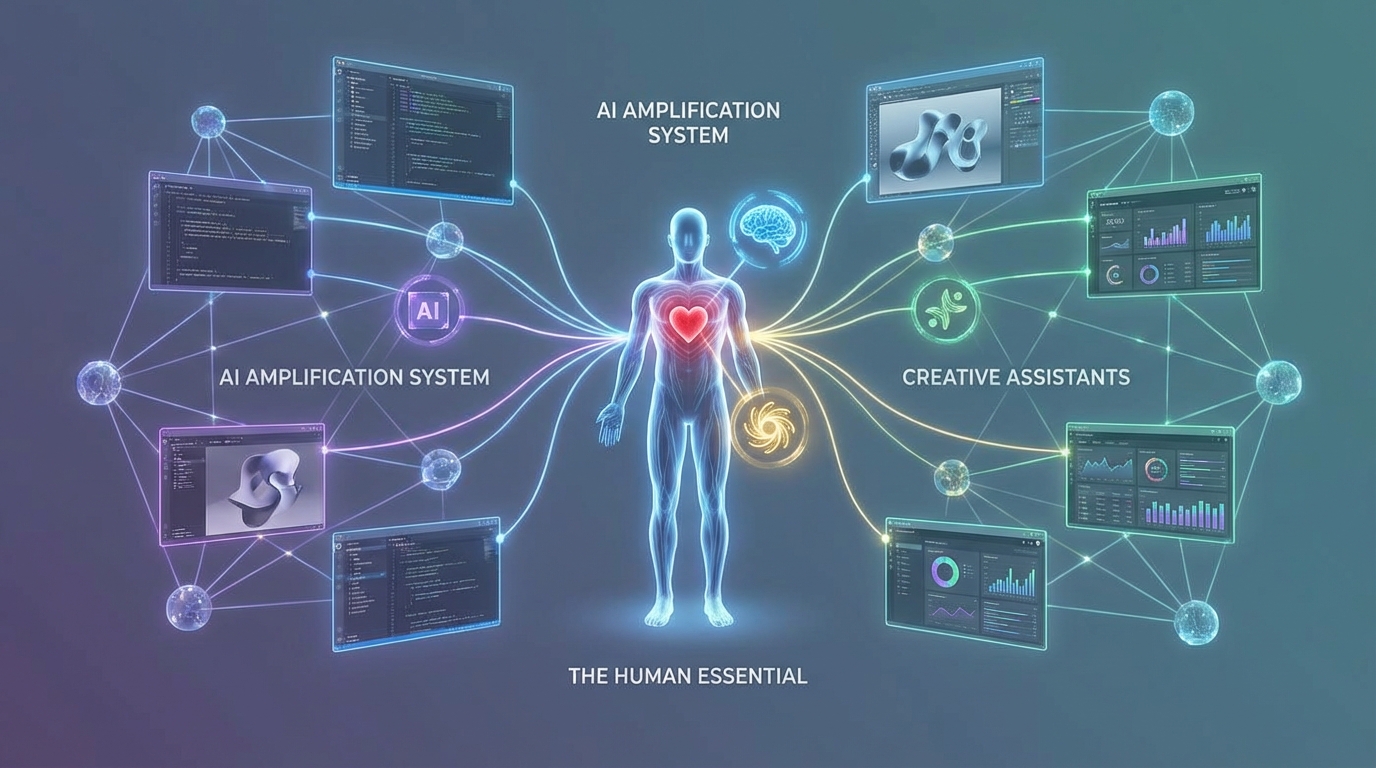
Here's the truth about AI-assisted design:
The genetic material still comes from humans.
No matter how sophisticated AI becomes at generating variations, optimizing solutions, or even predicting user needs, the fundamental ingredients come from human understanding:
- The problem worth solving (human insight)
- The values to optimize for (human judgment)
- The ethical boundaries (human responsibility)
- The meaning behind the product (human purpose)
AI can generate a million logo variations, but it doesn't know which one resonates emotionally. AI can write a million lines of code, but it doesn't understand why the product matters.
The IVF Wisdom:
Parents who use IVF often report that the experience makes them MORE intentional about parenting, not less. They've worked harder to have this child. They're more committed to raising them well.
Similarly, designers who use AI effectively often become MORE intentional about design decisions. The tool handles the grunt work, freeing the designer to focus on what matters most: meaning, value, and human connection.
What Can't Be Automated:
- Giving a damn about users
- Making hard ethical choices
- Taking responsibility for outcomes
- Creating genuine emotional connection
- Understanding cultural context
- Knowing when to break the rules
- Caring about the team and process
- Building trust with stakeholders
The Bottom Line:
Use all the AI tools you want. Generate a thousand concepts. Automate a million tests. But remember:
The heart of the product is your heart. The soul of the product is your soul. The responsibility for the product is your responsibility.
AI is the most powerful lever we've ever had in product design. But a lever still needs someone to pull it — and to decide which direction to push.
In the age of AI, being human isn't a limitation. It's your superpower. Don't outsource it.
10. Part IX: The Full Lifecycle Comparison
10.1. Chapter 27: The Complete Mapping
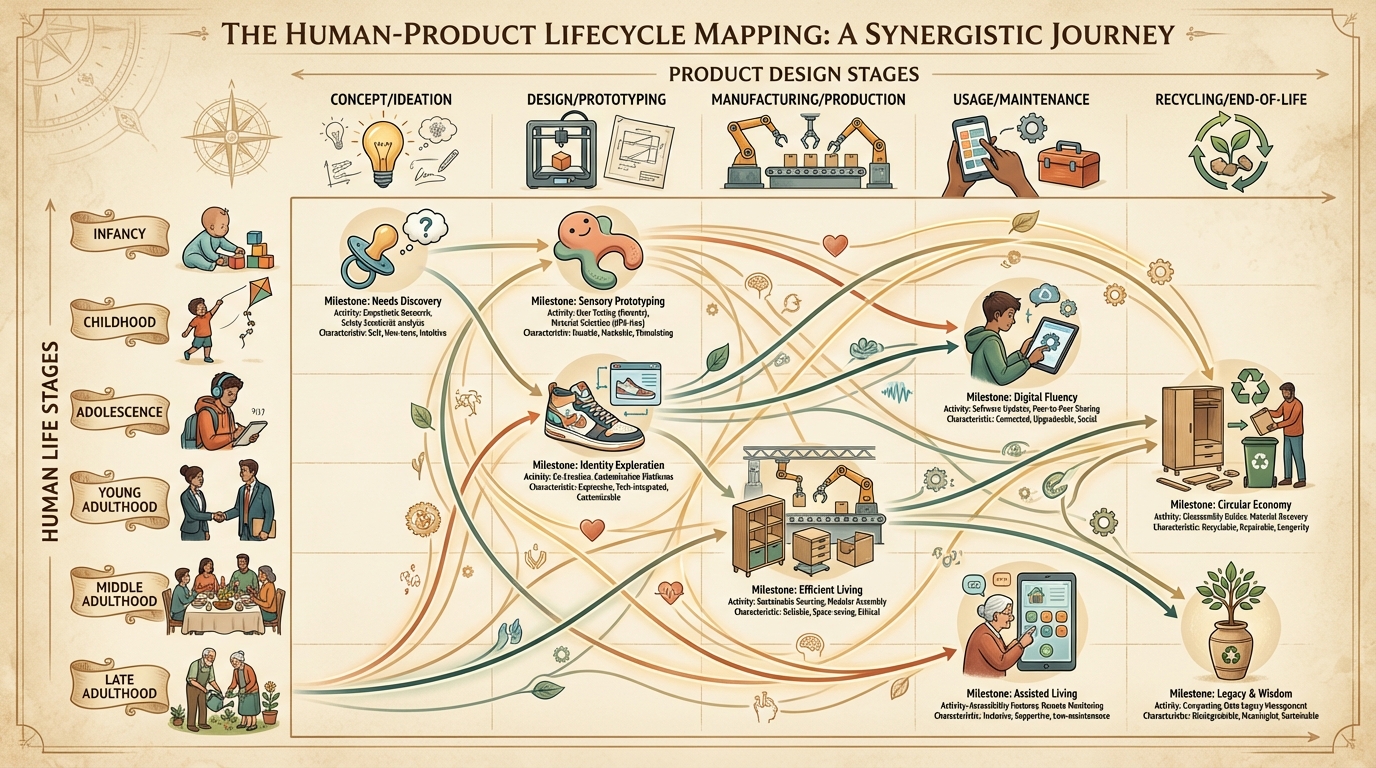
Let's bring it all together. Here's the complete mapping of human life stages to product design stages:
| Human Stage | Product Stage | Key Activities | Characteristic Feeling |
|---|---|---|---|
| Self-discovery | Market analysis | Understanding yourself, your capabilities | Introspection |
| Playing the field | Opportunity identification | Exploring options, meeting possibilities | Curiosity |
| First date | Initial research | Getting to know a problem | Nervous excitement |
| Going steady | Problem definition | Committing to a direction | Growing confidence |
| The proposal | Design brief approval | Asking for commitment | Hopeful anxiety |
| Engagement | Design strategy | Planning the journey | Anticipation |
| Wedding night | Ideation session | Creating possibilities | Creative ecstasy |
| Fertilization | Concept selection | Choosing the one | Decisive moment |
| Zygote | Early concept | Foundation forming | Potential energy |
| Implantation | Commitment checkpoint | Securing support | Relief |
| First trimester | Foundational design | Systems forming | Careful hope |
| Second trimester | Mid-development | Taking shape | Growing excitement |
| Third trimester | Pre-launch prep | Final preparations | Impatient waiting |
| Labor | Launch week | The final push | Intense focus |
| Birth | MVP launch | It's alive! | Overwhelming emotion |
| Newborn | Post-launch (0-3 mo) | Survival mode | Exhausted joy |
| Infant | Early growth (3-12 mo) | First milestones | Wonder |
| Toddler | Growth (1-2 years) | First steps, first words | Chaotic pride |
| Childhood | Maturation (3-12 years) | Learning, developing | Steady progress |
| Teenage | Pilot product | Identity, growth spurts | Turbulent change |
| Young adult | Full product GA | Independence | Confident anticipation |
| Career building | Market expansion | Growing influence | Ambitious energy |
| Mature adult | Established product | Stability, wisdom | Contented purpose |
The Meta-Insight:
Looking at this mapping, we see that product design isn't just LIKE creating life — it IS a form of creation. Products are expressions of human creativity and care. They require nurturing, patience, and love. They grow, change, and eventually find their place in the world.
The best products, like the best people, are created with intention and raised with care.
10.2. Chapter 28: What Kind of Parent Are You?
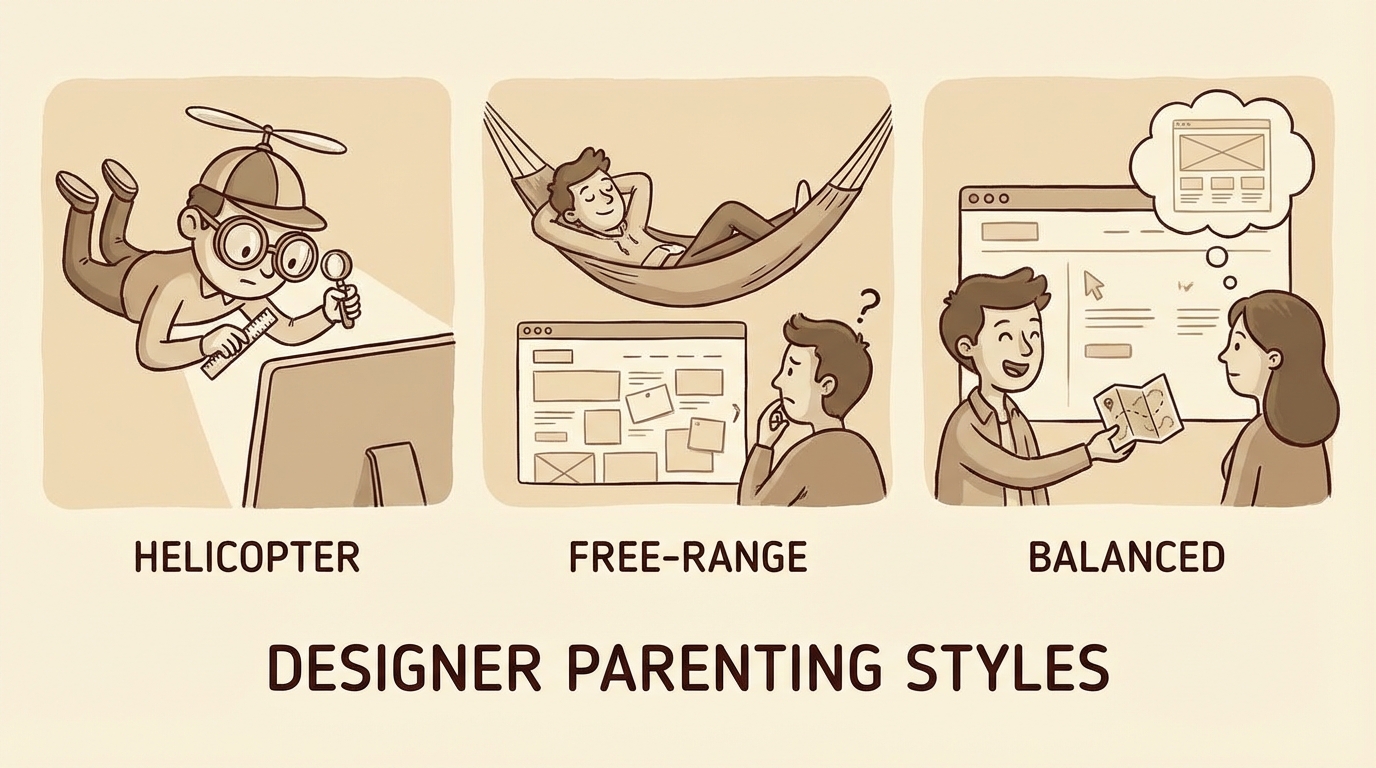
Every designer has a style. Every team has a culture. What kind of product parent are you?
The Helicopter Designer
- Reviews every pixel
- Tests every scenario personally
- Struggles to delegate
- Products are polished but team is exhausted
- Risk: Micromanagement kills creativity
The Free-Range Designer
- "Let's ship it and see what happens"
- Relies heavily on user feedback
- Comfortable with ambiguity
- Products iterate fast but can be chaotic
- Risk: Users feel neglected
The Tiger Designer
- Extremely high standards
- Intense review processes
- Only the best is acceptable
- Products are exceptional when they ship
- Risk: Products ship late (or never)
The Attachment Designer
- Deep emotional connection to every decision
- Struggles to let go of features
- Takes feedback very personally
- Products have strong personality
- Risk: Can't make hard cuts
The Authoritative Designer (The Gold Standard)
- Clear vision with room for collaboration
- High expectations with appropriate support
- Respects user autonomy while providing guidance
- Products are both excellent and human
- Balanced approach to feedback and iteration
Know Yourself:
There's no perfect style — each has strengths and weaknesses. The key is self-awareness. Know your tendencies. Build teams that complement your blind spots. Adapt your style to what each project needs.
Just like real parenting, product design parenting is something you learn by doing. You'll make mistakes. Your product will probably need therapy someday. That's okay. We're all doing our best.
11. Part X: Conclusion — The Human Act of Creation
11.1. Chapter 29: Why This Analogy Matters

We've journeyed through courtship, conception, pregnancy, birth, and the long years of growth. We've seen how products, like people, go through predictable stages — each with its own challenges and joys.
But why does this analogy matter?
It Reminds Us That Creation Is Human
In an age of AI, algorithms, and automation, it's easy to forget that product design is fundamentally a human act. We create things because we want to make life better. We pour ourselves into products because we care.
The pregnancy analogy reminds us that the best products aren't just made — they're born. They carry the DNA of their creators. They grow and change. They have personalities. They matter.
It Provides a Framework for Patience
Product development takes time. The pregnancy analogy reminds us that you can't rush gestation. You can't force a premature birth without consequences. Some things simply take as long as they take.
When stakeholders ask why the product isn't ready yet, you can now say: "We're in the second trimester. The organs are still forming."
It Creates Empathy for the Process
Understanding product design as a lifecycle helps everyone involved — designers, engineers, PMs, stakeholders, users — appreciate what it takes to bring something new into the world.
It's not just a project. It's a creation.
It Acknowledges Both Control and Surrender
Parents know they can influence but not fully control their children. The same is true for products. You can shape the vision, build the features, set the strategy — but ultimately, the market and users will determine what your product becomes.
Good product parents know when to guide and when to let go.
11.2. Chapter 30: A Love Letter to Design

Dear Designer,
This work you do — it's not just a job. It's an act of creation.
Every product you've brought into the world started as nothing. A spark. A need. A possibility. And through your care, your attention, your patience, and yes, your love — it became something real.
Something people use. Something that solves problems. Something that maybe, just maybe, makes life a little better.
That's not nothing. That's everything.
The journey is long. From that first flicker of attraction to a problem, through the messy conception of ideas, the long months of development, the painful (glorious) birth of the MVP, and the years of nurturing that follow — it's a marathon, not a sprint.
You will have morning sickness (doubt). You will have labor pains (crunch time). You will have sleepless nights (post-launch monitoring). You will have teenage rebellion (the redesign that backfires).
But you will also have:
- The first kick (the prototype that works)
- The first word (the user who gets it)
- The first step (the product finding its footing)
- The graduation (the product that stands on its own)
And eventually, if you've done your job well, you'll watch your creation walk out into the world and make its own way.
That's the gift and the curse of creation: you bring something into existence, nurture it with everything you have, and then let it go.
So go forth and create. Fall in love with problems. Conceive bold ideas. Nurture them with care. Birth them with courage. Raise them with wisdom.
The world needs what you make. The world needs you to make it.
With love and solidarity, A Fellow Creator
12. Appendix A: Quick Reference Card
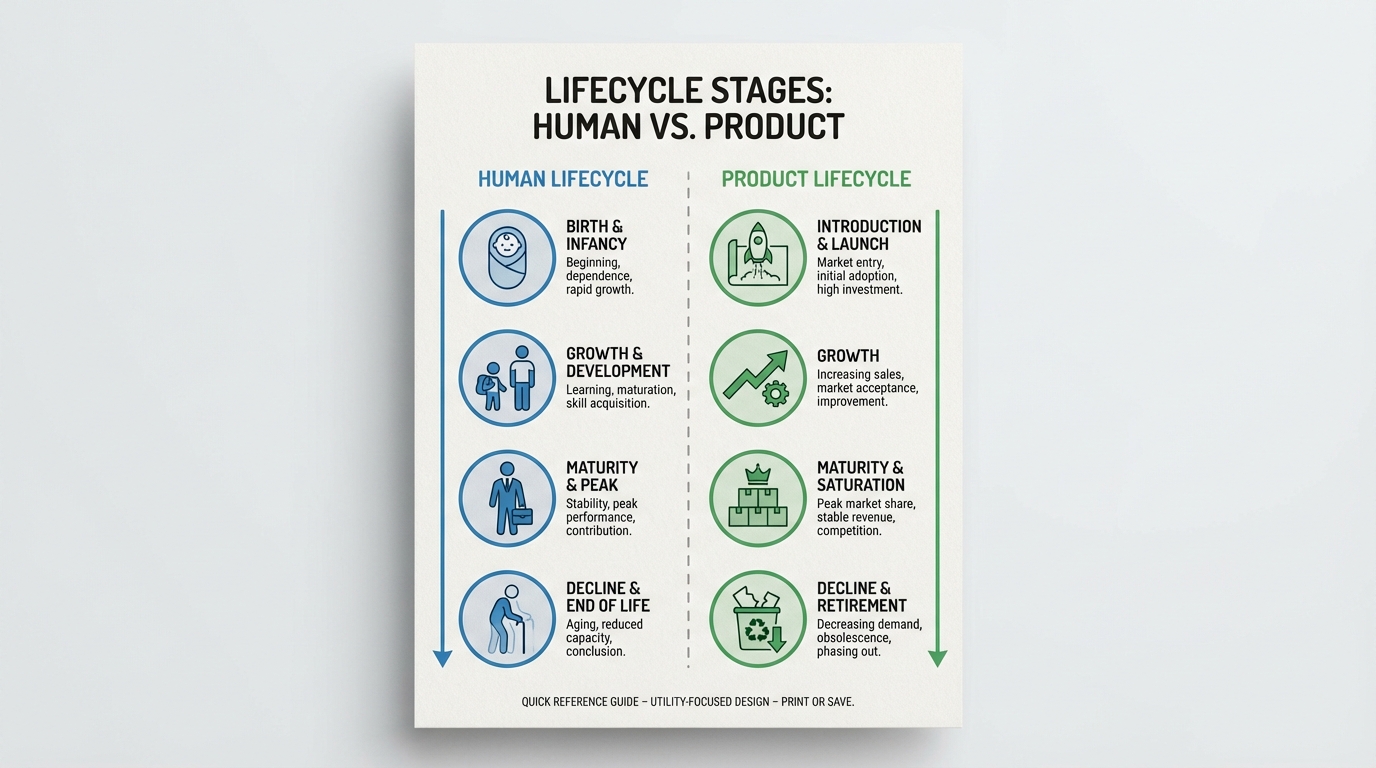
12.1. The Pregnancy-Product Design Quick Reference
Pre-Marriage → Problem Design
- Self-awareness → Capability assessment
- Playing the field → Market research
- First date → Initial user research
- Going steady → Problem definition
- Proposal → Design brief approval
- Engagement → Design strategy
Conception → Concept Design
- Wedding night → Ideation session
- Fertilization → Concept selection
- Zygote → Core concept formation
- Implantation → Commitment checkpoint
Pregnancy → Embodiment Design
- First trimester → Foundational architecture
- Second trimester → Feature development
- Third trimester → Launch preparation
Birth → MVP Launch
- Labor → Launch week
- Birth → Go live
- First cry → First users
Childhood → Product Growth
- Newborn → Post-launch (0-3 mo)
- Infant → Early growth (3-12 mo)
- Toddler → Scaling (1-2 years)
- Childhood → Maturation (3-12 years)
Adulthood → Full Product
- Teenage → Pilot product
- Young adult → GA launch
- Career building → Market expansion
- Mature adult → Established product
© 2026 | Written with love for the design community | May all your products be born healthy
This blog post was created with the same philosophy it describes — human creativity, patient development, and maybe just a little help from AI. The author believes that the best products, like the best children, are raised with intention, love, and a healthy sense of humor about the chaos along the way.
Share This: 🍼 #PregnancyInProductDesign 👶 #ProductLifecycle 💡 #DesignThinking 🤖 #HumanAICollaboration