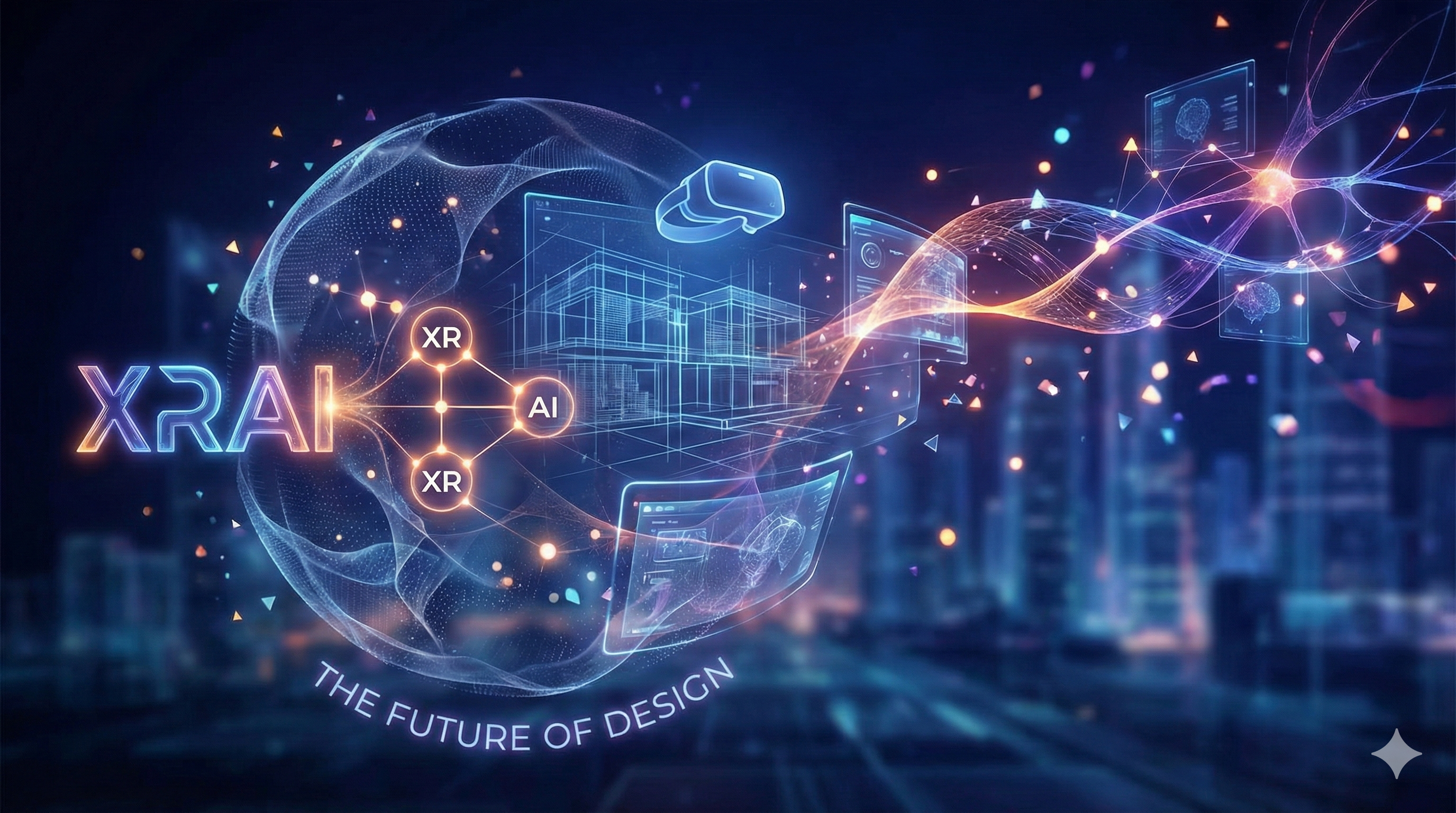
The Future of Design: Integrating XR and AI
The Future of Design: Integrating XR and AI
Welcome to this comprehensive exploration of how Extended Reality (XR) and Artificial Intelligence (AI) are revolutionizing the design landscape.
1. Introduction
The convergence of XR and AI is unlocking new possibilities in human-computer interaction that were previously confined to the realm of science fiction. As designers, we find ourselves at the forefront of a technological revolution that demands both creativity and technical understanding.
2. What is Extended Reality (XR)?
Extended Reality is an umbrella term that encompasses:
- Virtual Reality (VR) - Fully immersive digital environments
- Augmented Reality (AR) - Digital overlays on the real world
- Mixed Reality (MR) - Seamless blending of physical and digital worlds
3. The Role of AI in Modern Design
Artificial Intelligence is transforming design workflows through:
3.1. Automated Design Generation
AI algorithms can now generate design variations, color palettes, and layout suggestions based on user preferences and design principles.
3.2. Predictive User Experience
Machine learning models analyze user behavior patterns to predict and optimize user interactions before implementation.
3.3. Content Personalization
AI enables dynamic content adaptation based on individual user profiles and contextual data.
4. Key Benefits of XR-AI Integration
- Enhanced Prototyping: Rapid iteration in virtual environments
- Immersive Testing: Real-time user feedback in simulated conditions
- Intelligent Adaptations: AI-driven interface modifications based on user behavior
- Accessibility Improvements: Automated accessibility feature integration
5. Real-World Applications
5.1. Architecture and Construction
- Virtual walkthroughs of buildings before construction
- AI-optimized space utilization
- Predictive maintenance through AR interfaces
5.2. Product Design
- 3D modeling in virtual space
- AI-assisted form factor optimization
- Virtual material testing
5.3. User Interface Design
- Spatial UI development for AR/VR
- AI-powered user journey optimization
- Voice and gesture interaction design
6. Challenges and Considerations
While the potential is enormous, several challenges remain:
- Technical Complexity: Steep learning curves for new technologies
- Hardware Limitations: Current XR devices still have constraints
- User Adoption: Varying comfort levels with immersive technologies
- Ethical Considerations: Privacy and data usage in AI systems
6.1. Technical Challenges
6.1.1. Implementation Complexity
Getting started with XR and AI integration requires significant technical expertise.
6.1.2. Performance Optimization
Real-time rendering and AI processing demands high computational resources.
6.2. User Experience Challenges
6.2.1. Learning Curve
Users need time to adapt to new interaction paradigms.
6.2.2. Accessibility Concerns
Ensuring inclusive design across diverse user capabilities.
7. Future Outlook
The next decade promises exciting developments:
- Brain-Computer Interfaces: Direct neural interaction with digital systems
- Photorealistic Virtual Environments: Indistinguishable from reality
- AI Design Assistants: Collaborative AI partners in the creative process
- Universal Accessibility: Inclusive design through intelligent adaptation
8. Conclusion
As designers, we need to embrace this evolution and develop new skills that bridge the gap between traditional design principles and emerging technologies. The future belongs to those who can seamlessly integrate human creativity with machine intelligence.
The convergence of XR and AI isn't just changing how we design—it's fundamentally reshaping what design can be. By staying curious, experimental, and user-focused, we can harness these powerful technologies to create experiences that were previously impossible.
What are your thoughts on XR and AI in design? Have you experimented with these technologies in your projects? Share your experiences and let's continue the conversation.